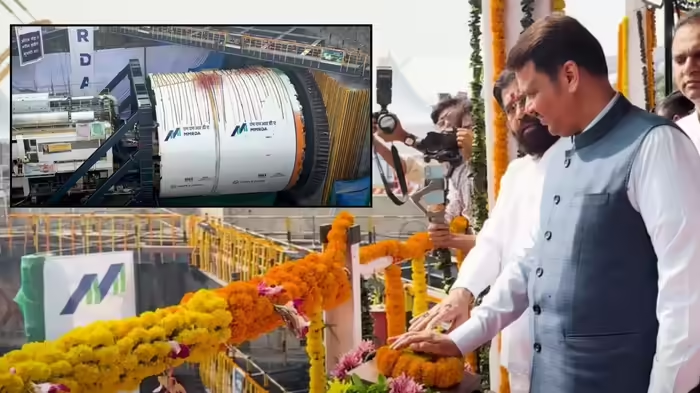
Mumbai: Following landmark projects like the Worli Sea Link, Atal Setu, and Coastal Road, Mumbai is set to witness the construction of India’s first urban tunnel, connecting East and West Mumbai. On Wednesday, Chief Minister Devendra Fadnavis, in the presence of Deputy CM Eknath Shinde, inaugurated the Orange Gate Tunnel Project under the Mumbai Metropolitan Region Development Authority (MMRDA).
The 9.96 km tunnel will allow commuters to travel from Orange Gate to Marine Drive in just 10 minutes. CM Fadnavis officially launched the Tunnel Boring Machine (TBM) by pressing a button. The project, estimated at ₹8,056 crore, is expected to be a game-changer for Mumbai’s transport system. The tunnel will feature two 3.2-meter-wide lanes and an emergency lane, running under densely populated areas, Western and Central Railway lines, and Metro-3, about 50 meters below ground.
Why the Tunnel Was Needed
CM Fadnavis stated that the tunnel will significantly reduce travel time and ease traffic congestion, especially for commuters from Eastern and Western suburbs heading to South Mumbai or Navi Mumbai Airport. Previously, traffic jams on the Eastern Freeway extended travel time by 15–20 minutes. The tunnel’s design overcomes space constraints that made a flyover impractical, passing under 700 properties and century-old heritage structures.
Project Timeline and Contractor
The tunnel is slated for completion by December 2028, with efforts to finish six months earlier. Construction responsibility has been assigned to L&T, a well-known engineering company. Once operational, commuters will save thousands of hours, making this a historic day for Mumbai traffic management.
Key Features of the Orange Gate Tunnel Project:
- Project Cost: ₹8,056 crore
- Length: 9.96 km (7 km underground)
- Lanes: Two 3.2-meter-wide lanes per tunnel + 1 emergency lane
- Speed Limit: 80 km/h
- Safety: Both tunnels connected via cross-pass every 300 meters
Impact on Mumbai Traffic
Deputy CM Shinde explained that traffic from Thane and Navi Mumbai via Atal Setu often gets stuck near freeway exits. The tunnel will redirect this flow, easing congestion toward Marine Drive, Churchgate, and Coastal Road. This urban tunnel, alongside metro expansions (Metro-3, Metro-2A, Metro-7), will further transform Mumbai’s transport system, saving fuel, reducing pollution, and cutting commuting time dramatically.
Discover more from SD NEWS agency
Subscribe to get the latest posts sent to your email.