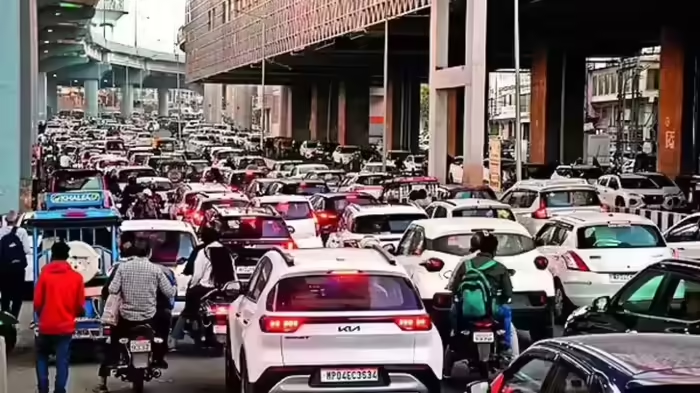
Bhopal: Bhopal’s metro is now operational, yet for many commuters, reaching the stations remains a challenge. E-bikes, buses, and last-mile connectivity options are not functioning efficiently, leaving traffic snarls on the roads largely unchanged. Experts say meaningful improvements will only be visible once all metro sections are fully operational.
Traffic Woes Persist
A week after the metro’s launch, traffic congestion shows little sign of easing. During peak hours, major junctions such as Board Office Square, MP Nagar, and DB Mall remain packed with cars, motorcycles, and auto-rickshaws. Despite the modern metro running above, life on the streets continues to crawl.
Connectivity Challenges
Many commuters had hoped that the metro would make daily travel easier. Bank employee Ritesh Verma said, “I took the metro to work today. The journey inside the train was comfortable, clean, and fast, but reaching the station remains a problem. Without better connectivity, it doesn’t save me much time.” This reflects a larger challenge for India’s urban planners: making public transport so accessible and convenient that people shift away from private vehicles.
Limited Impact on Traffic
Officials acknowledge that until additional metro sections are completed, the impact on road traffic will remain limited. Construction on other corridors continues along key routes, and barricades and narrow lanes have worsened congestion in some areas. A senior official noted, “The effect on street traffic will remain partial until the full corridor is operational.”
Metro Gradually Attracting Commuters
Despite early challenges, passengers have praised the metro’s modern facilities. Officials expect that as feeder services stabilize and fare systems are streamlined, the metro will attract more users. One commuter added, “Once last-mile connectivity improves, I think people will start leaving their cars at home.”
Long-Term Benefits Expected
A senior government official, speaking on condition of anonymity, said that large infrastructure projects take time to show visible results. “The Bhopal Metro is a long-term investment in sustainable urban transport. As more corridors open, traffic congestion will reduce, and air quality will improve,” he said.
Caught Between Two Realities
For now, commuters are caught between two contrasting realities. Above, the new metro glides silently along elevated tracks—a symbol of progress and ambition. Below, the city’s streets remain choked with noise, chaos, and congestion. The early days of the metro illustrate the initial pains of urban transformation. Its success will depend not just on trains and tracks but on how seamlessly it integrates with the city’s wider public transport network.
Discover more from SD NEWS agency
Subscribe to get the latest posts sent to your email.