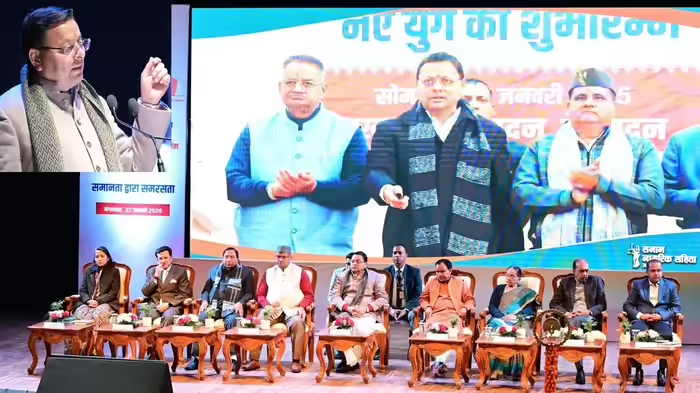
Dehradun, Uttarakhand: The Uttarakhand government has introduced significant amendments to the state’s Uniform Civil Code (UCC), imposing stricter penalties for offenses related to marriage and live-in relationships. The changes, approved by Governor Lieutenant General Gurmeet Singh (Retd.), include imprisonment of up to seven years for forced or fraudulent marriages and live-in arrangements.
The original UCC was implemented in the state on 27 January 2025, making Uttarakhand the first state in India to adopt a comprehensive civil code. Following a one-year review, the amendments strengthen punitive measures against offenses involving coercion, deception, or pressure in marital and live-in relationships.
Key Provisions of the Amendments:
- Forced or Fraudulent Relationships: Any person found guilty of using force, pressure, or deceit to enter into a marriage or live-in relationship may face imprisonment for up to seven years. This also applies to individuals entering a new relationship without legally dissolving an existing marriage.
- Multiple Relationships: Individuals already in a live-in relationship who enter another such relationship may also face up to seven years’ imprisonment. Adults in live-in relationships with minors are subject to six months’ simple imprisonment, a fine of up to ₹50,000, or both. Failure to pay the fine may result in an additional one-month imprisonment.
- False Information and Concealment: Providing false information or hiding facts to enter into a marriage or live-in relationship is now punishable under the Indian Justice Code (BNS). Those who coerce, instigate, or force others to follow prohibited conditions before remarriage may face up to three years in prison and a fine of ₹1 lakh, with six additional months of imprisonment in case of default.
- Illegal Divorce: Individuals obtaining divorce through unlawful means may face up to three years in prison and fines, except in cases involving child marriage, where the Prohibition of Child Marriage Act, 2006, applies.
- Administrative Updates: The amendments empower the Additional Secretary as the competent authority under Section 12 and provide that cases not processed by sub-registrars within the stipulated time will be escalated to the Registrar or Registrar General. Appeals against fines are now permitted, and recovery of fines will be treated as land revenue.
- Concealed Identity: Concealing one’s identity during marriage is now a valid ground for annulment. Registrars are authorized to issue termination certificates for live-in relationships and cancel registrations related to marriage, divorce, live-in arrangements, and succession. Terminology updates include replacing “husband-wife” with “widow” in Schedule 2.
Purpose of the Amendments:
Officials stated that these changes follow a detailed review of the UCC’s implementation over the past year. The aim is to make the provisions clearer, more effective, and practically enforceable, strengthen administrative efficiency, and ensure better protection of citizens’ rights.
Discover more from SD NEWS agency
Subscribe to get the latest posts sent to your email.