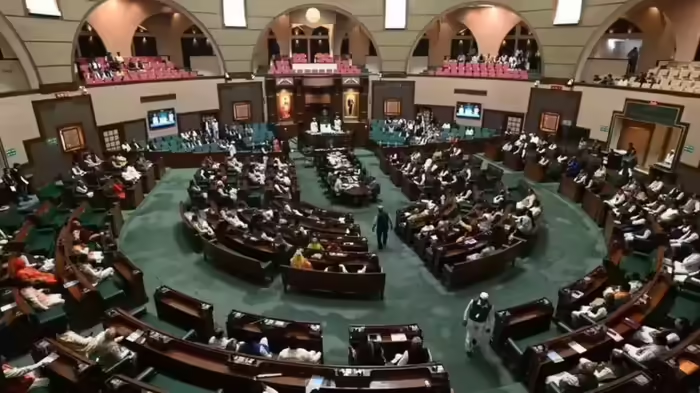
BHOPAL: Madhya Pradesh is set to make history by presenting its first-ever paperless budget in the state assembly on February 18, 2026. Replacing the traditional bulky budget books, the Finance Minister will rely solely on a speech and a printed budget handout. This initiative follows the state’s adoption of e-office and e-cabinet systems, marking a significant step toward digital governance.
Focus on Agriculture and Pilgrimage
This year, the state government plans to prioritize the agricultural sector, as 2026 has been declared an agricultural year. Additionally, substantial provisions are expected for the upcoming Simhastha (Kumbh) festival in 2028.
Innovative Budgeting Approaches
For the first time, the Madhya Pradesh government will implement ‘non-budgetary provisions’ to continue funding development projects and announcements. Under this approach, expenses for certain government projects will be covered through state-owned enterprises, boards, and corporations, rather than directly from the annual state budget. This allows the state to manage financial activities flexibly without immediately impacting the official budget figures.
Budget Size and Financial Challenges
The 2026-27 budget is projected to be larger than last year’s ₹4.21 lakh crore, estimated at around ₹4.80 lakh crore. However, a reduction in the state’s share of central taxes—from 7.850% to 7.347%—is expected to reduce funding by roughly ₹8,000 crore, adding pressure to the state’s finances over the next five years. Finance officials estimate this will result in an annual shortfall of approximately ₹7,500 crore from the center.
Rolling Budget for Long-Term Planning
Chief Minister Mohan Yadav finalized the budget proposals on February 10, emphasizing that they are tailored for current priorities. This year introduces the ‘rolling budget’ concept, covering fiscal years 2026-27, 2027-28, and 2028-29. These budgets will undergo annual review and adjustment, enabling more long-term and forward-looking policy planning. Last year, the state had also implemented ‘zero-based budgeting,’ requiring all expenditures to be justified afresh each year.
Discover more from SD NEWS agency
Subscribe to get the latest posts sent to your email.