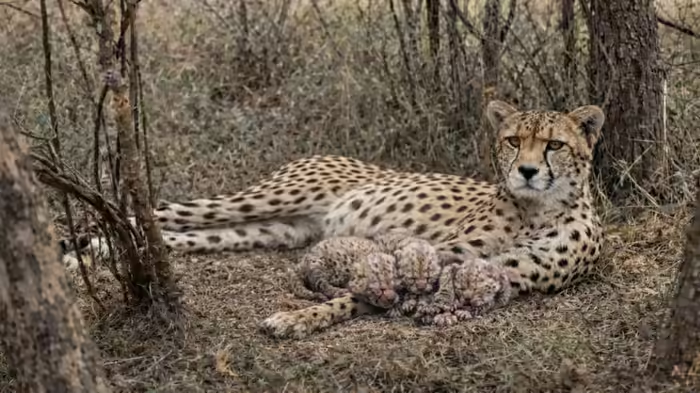
Shivpuri, Madhya Pradesh: India’s cheetah reintroduction project has reached a new milestone. At Kuno National Park, the South African female cheetah Gamini has given birth to three more cubs, raising the country’s total cheetah population to 38. Since the project began three years ago, nine successful births have been recorded on Indian soil.
Adapting to Madhya Pradesh
The cheetahs brought from Namibia and South Africa are now settling well in their new environment. Union Minister Bhupendra Yadav confirmed that Gamini has successfully delivered three cubs, marking the ninth successful breeding event in India and bringing the number of surviving cubs to 27.
This is the second time Gamini has given birth to three cubs, highlighting that the cheetahs are adapting successfully and reproducing in their new habitat.
Three Years of Project Cheetah
This achievement coincides with the completion of three years of the ambitious Project Cheetah, which in 2022–23 brought 20 cheetahs from Namibia and South Africa to India, completing the world’s first intercontinental large carnivore translocation. Prime Minister Narendra Modi released the first eight cheetahs into Kuno on 17 September 2022, marking a historic moment in India’s wildlife conservation journey. Since then, forest officials, wildlife managers, and veterinarians have closely monitored the animals to ensure their successful acclimatization to Madhya Pradesh’s ecosystem.
Growing Confidence with Every Birth
Every cub born at Kuno reinforces faith in Project Cheetah. Relocating large predators across continents is an extraordinarily complex and high-risk endeavor. Success depends on multiple factors, including climate adaptation, availability of prey, disease management, and constant human supervision.
Minister Bhupendra Yadav described the new births as a proud moment for India and expressed hope that Gamini and her cubs will continue to expand the cheetah population in the country. “The health of Gamini and her cubs is a testament to our conservation efforts. I am confident these cubs will strengthen India’s cheetah revival story,” he said.
Restoring a Lost Ecosystem
Once, cheetahs roamed India’s plains freely, but hunting and habitat loss led to their extinction. For decades, their absence left a gap in the country’s ecosystems. Project Cheetah aims not only to bring back these predators but also to restore grasslands, enhance biodiversity, and create new employment opportunities through eco-tourism in central India.
Challenges Along the Way
The journey has been far from easy. Moving cheetahs between continents is among the most difficult scientific undertakings. They face challenges such as adapting to a new environment, hunting successfully, and avoiding human interference. Despite these obstacles, the births on Indian soil demonstrate the project is moving in the right direction. With 38 cheetahs now in India and nine successful cub births, the goal of a self-sustaining population is becoming a reality.
Project Cheetah at a Glance
- Female cheetah Gamini has given birth to three cubs for the second time at Kuno, underscoring the project’s success.
- The number of surviving cubs in India has risen to 27, reducing dependency on foreign cheetahs.
- Prime Minister Narendra Modi released eight cheetahs into Kuno in September 2022, marking the beginning of a sustainable population.
- Intensive monitoring by experts, veterinarians, and forest staff has improved cub survival rates.
- The project’s broader aim is to not only establish a cheetah population but also revitalize India’s grasslands.
Discover more from SD NEWS agency
Subscribe to get the latest posts sent to your email.