Patna, January 24
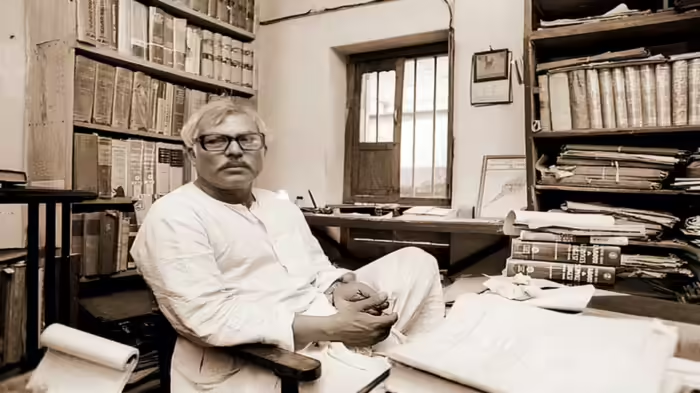
Today marks the birth anniversary of Jan Nayak Karpuri Thakur (24 January 1924 – 17 February 1988), Bihar’s indomitable leader who rose from humble beginnings to become Chief Minister twice, yet never completed a full term in office. Known for his courage and commitment to social justice, Thakur’s tenure was marked by coalition challenges and the fiery politics of reservation.
First Term: Overcoming Bhola Paswan Shastri’s Challenge
Karpuri Thakur first became Chief Minister in December 1970, after navigating a political challenge from Bhola Paswan Shastri. Following the resignation of CM Daroga Prasad Rai on 1 December 1970, Shastri sought to form the government with the support of the Indira Congress faction. However, the Governor invited Thakur’s party, the Samyukta Socialist Party (SSP), to form the government.
Given the complexities of a coalition, Thakur had to assemble a massive council of 52 ministers. Internal factionalism within SSP and negotiations with coalition partners ultimately forced him to resign before completing his term.
Second Term: Triumph and Turmoil Over Reservation
In 1977, after the formation of the Janata Party, Karpuri Thakur was elected as a Member of Parliament from Samastipur. Despite being an MP, Bihar legislators overwhelmingly supported him to become the Chief Minister once again, defeating party state president Satyendra Narayan Sinha in a leadership vote—Thakur received 144 votes to Sinha’s 84.
Thakur’s second tenure was dominated by the contentious politics of caste-based reservation. He implemented 26% reservation in government jobs—20% for backward classes, 3% for women, and 3% for economically weaker sections of the upper castes. While a landmark move for social justice, it drew fierce opposition from the upper-caste factions within his party, particularly the Bharatiya Jan Sangh, and sparked violent protests across Bihar.
Even Prime Minister Morarji Desai openly criticized Thakur’s reservation policy during a mass rally in November 1978. Thakur, undeterred, enforced the policy, a decision that heightened intra-party divisions and eventually led to a no-confidence motion. On 19 April 1979, the Bihar Assembly passed the motion with 135 votes against him and 105 in his favor, forcing Thakur to resign and paving the way for Ram Sunder Das to take office.
A Legacy of Courage and Commitment
Karpuri Thakur remains one of Bihar’s most revered leaders, remembered for his unwavering commitment to backward classes and social justice. Despite facing relentless political pressures and systemic challenges, he prioritized the rights of marginalized communities and left an indelible mark on the state’s political history.
Twice Chief Minister, twice challenged by factionalism and opposition, Karpuri Thakur’s story is a testament to resilience, principle-driven politics, and the fiery pursuit of equity in governance.
Discover more from SD NEWS agency
Subscribe to get the latest posts sent to your email.