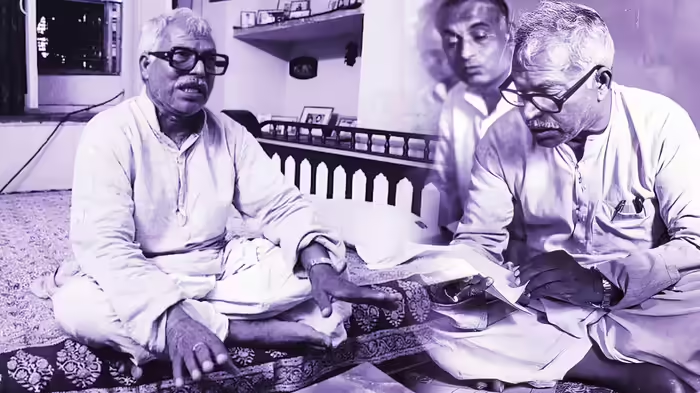
Patna, Bihar: Born on January 24, 1924, in Pitaunjhia village (now Karpuri Gram) of Samastipur district, Karpuri Thakur rose from the Musahar community to become the voice of Bihar’s marginalized. Overcoming poverty and caste discrimination, he dedicated his life to the cause of Dalits, backward classes, and the oppressed, laying the foundation for social justice that resonates to this day.
Early Life: Struggles and Education
Karpuri Thakur’s family was socially, educationally, and politically disadvantaged in the caste-stratified society of pre-independence India. As a child, he would stand outside the grand havelis of landlords, listening attentively to the lessons being taught to children inside. Through sheer determination, he gained knowledge and became one of the few from his village to pass the 10th-grade board exams. Later, he enrolled in the prestigious CM College, Darbhanga, while facing immense social and economic challenges.
Freedom Fighter and Social Crusader
Karpuri Thakur’s formal education remained incomplete due to his active participation in India’s freedom struggle. Inspired by Mahatma Gandhi’s call of “Do or Die” in 1942, he joined the Quit India Movement. Arrested in 1943 for his activism, he continued his struggle even after being released in 1945, advocating non-violent resistance against British rule and championing the rights of landless farmers. Influenced by leaders like Subhas Chandra Bose, Jayaprakash Narayan, Ram Manohar Lohia, Acharya Narendra Dev, and Pandit Ramnandan Mishra, Karpuri Thakur emerged as a committed socialist leader and defender of the downtrodden.
Political Journey: Voice of the Poor
Karpuri Thakur first won a legislative assembly seat in 1957 from Tajpur and went on to serve twice as Bihar’s Chief Minister. Yet politics was never his goal; his purpose was public service. Known for his humility and accessibility, his office remained crowded with poor citizens seeking help, sometimes even causing discomfort for officials. One anecdote recalls him inviting lower-ranked staff to dine with him, ignoring criticism from bureaucrats. His dedication to equality, irrespective of religion or caste, earned him the affectionate title of “Jan Nayak” (People’s Leader).
Legacy of Social Justice
Karpuri Thakur’s life was a testament to selfless service and unwavering commitment to the marginalized. His fight against social inequality and his advocacy for the rights of Dalits, backward classes, and the poor remain a cornerstone of Bihar’s social justice movement. Even decades after his passing, his voice continues to inspire millions across the state, echoing the belief that true leadership is rooted in compassion, equality, and justice.