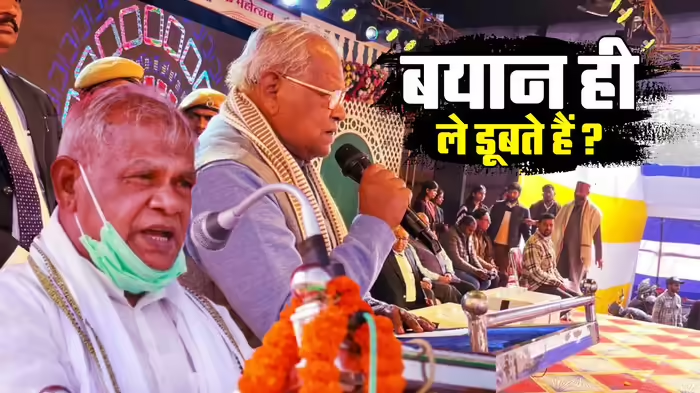
Patna, Bihar: Once again, Jitan Ram Manjhi is making headlines for his outspoken statements, stirring political debates and raising concerns about his ministerial position at the central level. This recalls 2014, when Nitish Kumar appointed Manjhi as Bihar’s Chief Minister, bypassing several senior leaders and key allies. However, Manjhi’s bold remarks and controversial statements led to his ouster after just nine months in office.
A Short-Lived Chief Ministership
Manjhi was initially guided by Nitish Kumar but soon began asserting his independence, making statements that strained political equations. His remarks reportedly alienated influential groups, making it increasingly difficult for Nitish Kumar to manage the situation. Had Manjhi exercised more caution in his statements, he might have served as Chief Minister for a much longer period.
Key Controversial Statements
- 12 February 2015: During a teacher’s assembly at Gandhi Maidan, Manjhi admitted publicly that money was siphoned off from a bridge project, including commissions for himself and contractors—shocking for a leader under Nitish Kumar’s “zero tolerance for corruption” policy.
- 13 August 2014: He claimed that a ₹25,000 electricity bill at his residence was settled for ₹5,000 via a bribe.
- 29 August 2014: Addressing Dalit students, Manjhi promoted inter-caste marriages to increase the Dalit vote share from 16% to 22%, saying political power would follow.
- 31 August 2014: On the Bihar floods, he said eating rats during hardship was not shameful, sharing that he had done so himself.
- 3 September 2014: Speaking at a Chamber of Commerce event, he justified minor black-market trading if done to support family or children’s education.
- 17 October 2014: Threatened doctors at Patna Medical College and Hospital with severe action if they neglected poor patients.
- 12 November 2014: Claimed that the “upper castes” in Bihar were descendants of Aryans who had migrated from abroad, while Dalits and Adivasis were the original inhabitants.
Political Implications
Manjhi’s outspoken style, while reflecting his boldness, has historically caused friction with party leadership and political allies. Observers note that his recent statements may once again put his ministerial role under scrutiny.
Manjhi’s career illustrates how a leader’s words can significantly influence political fortunes, and whether history will repeat itself remains a question for Bihar’s political circles.
Discover more from SD NEWS agency
Subscribe to get the latest posts sent to your email.