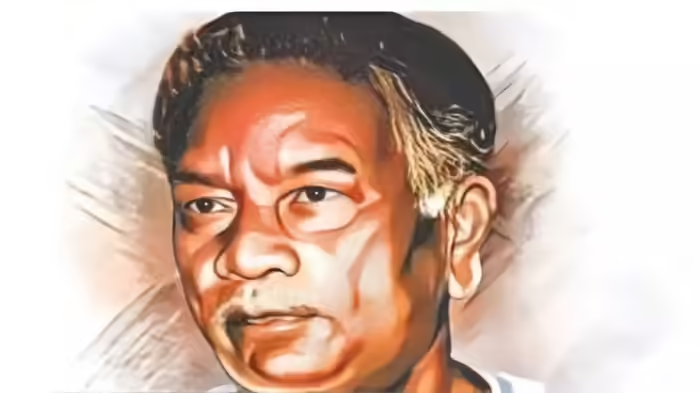
Dhanbad, Jharkhand: Whenever the story of Jharkhand is told, three towering leaders—Vinod Bihari Mahto, Shibu Soren, and A.K. Rai—are remembered for their tireless struggle for the marginalized. Each of these leaders fought for the poor and oppressed in distinct ways. Vinod Bihari Mahto championed the legal rights of displaced farmers and worked as a social reformer, Shibu Soren protected tribal communities from exploitative moneylenders, and A.K. Rai, an engineer by profession, left his job to safeguard mining laborers from coal mafia exploitation.
Formation of Jharkhand Mukti Morcha (JMM)
Despite their individual efforts, meaningful change for workers and tribal communities was slow. Recognizing the need for a united front, the three leaders convened at Mahto’s residence in Dhanbad. On 4th February 1973, they formally established the Jharkhand Mukti Morcha (JMM), with Vinod Bihari Mahto as President and Shibu Soren as General Secretary.
Political Journey
Before founding JMM, Vinod Bihari Mahto was associated with the Marxist Communist Party (CPM) but disagreed with the Congress and Jan Sangh, viewing them as parties of the capitalists. He contested the 1971 Lok Sabha election from Dhanbad on a CPM ticket but lost. In 1980, he won the Bihar Assembly election from Tundi (Dhanbad) as a JMM candidate and retained the seat in 1990. Mahto entered the Lok Sabha in 1991 from Giridih but passed away in December of the same year, leaving a significant void in the party’s leadership. His son, Rajkishore Mahto, subsequently won the by-election in February 1992.
From Clerk to Lawyer: A Determined Journey
Born into a poor family in the Kudmi community, Vinod Bihari Mahto initially worked as a clerk in Dhanbad’s supply department to support his family. A humiliating comment from a lawyer—“What do you know? You’re just a clerk”—ignited his determination to become a lawyer. While working, he resumed his studies, completed his graduation, and then enrolled at Patna Law College. Returning to Dhanbad, he quickly gained recognition as a prominent lawyer.
Championing Farmers’ Rights
During the acquisition of land for projects such as the Bokaro Steel Plant, Mahto fought for fair compensation for displaced farmers, often using his own resources to ensure legal representation for the poor. He later took up cases of displaced coal miners, expanding his social engagement.
Social Reforms in the Kudmi Community
Deeply concerned about social evils affecting his community—such as dowry, alcoholism, and debt—Mahto founded the ‘Shivaji Samaj,’ inspired by Chhatrapati Shivaji Maharaj’s warrior and reformer ethos. This organization eventually merged with the JMM.
Promotion of Kudmi Language and Culture
Through Shivaji Samaj, Mahto actively promoted the Kurmali language and literature, encouraging scholars and writers. His efforts led to the inclusion of Kurmali studies at Ranchi University. He also revitalized Kudmi cultural traditions such as Gohal Puja, Tusu Parab, Jitiya, Sohrai, and Mansa Puja, inspiring pride within the community.
Vinod Bihari Mahto remains a source of inspiration in Jharkhand, celebrated not only as a political leader but also as a social reformer and cultural guardian of the Kudmi people.
Discover more from SD NEWS agency
Subscribe to get the latest posts sent to your email.