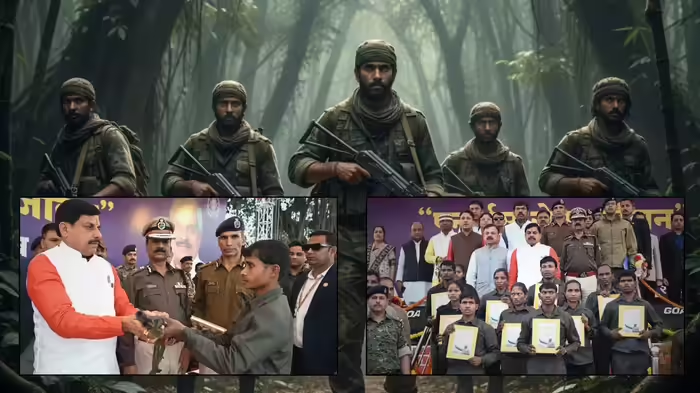
The once-feared MMC Special Zone — spread across Maharashtra, Madhya Pradesh and Chhattisgarh — has collapsed to its weakest point in decades. A region that was once considered one of the most violent Maoist pockets outside Dandakaranya is now reduced to just six surviving Naxals, hiding in shrinking forest patches and constantly shifting locations to evade arrest.
The downfall began on 28 November, when 11 Maoists surrendered in Maharashtra’s Gondia district. The group included Vikas Nagpure alias Anant, the key commander involved in the killing of Hawk Force Inspector Ashish Sharma. This marked the first major crack in the organisation’s structure.
Within the next ten days, 33 more Maoists laid down their arms, signalling the near-total breakdown of Maoist dominance in the region. Once a fortified red corridor linking Gondia to Balaghat, Khairagarh to Kabirdham, the MMC zone has now become a refuge for just a handful of fugitives.
The Turning Point: Major Commanders Quit the Movement
The most dramatic shift came with the surrender of two members of the Special Zonal Committee, including the notorious Surendra alias Kabir Sodi, who surrendered with INSAS rifles, AK-series weapons and other arms. His exit dismantled the entire northern MMC structure, effectively clearing out Maoist influence from large stretches of Kanha National Park and surrounding forests.
But the final blow came a day later.
Ramdhar Maji: The Last Pillar Falls
Ramdhar Maji, a Central Committee member of the CPI (Maoist) and the undisputed commander of the 14-member elite strike force in southern MMC, surrendered along with 11 others in Chhattisgarh.
He was the mastermind behind multiple ambushes across Rajnandgaon, Khairagarh and Balaghat — a strategist so vital that Maoist leaders had entrusted him with preventing the collapse of the MMC stronghold. Fluent in Telugu, Gondi and Hindi, capable of trekking 30–40 km daily with no rest, he was known within the organisation as the “field-level brain.”
Sources reveal that Maji operated with a heavily armed seven-member personal guard, internally known as the “Deadly Group.” This team included fighters armed with AK rifles, SLRs and INSAS weapons, and Maji never moved without them.
Why the Collapse Happened: Disillusionment and Isolation
Intelligence reports indicate that Maoists in the MMC region were exhausted, demoralised and struggling for survival:
- Supply chains had broken down
- Communication with Dandakaranya leadership had failed
- Senior cadres were desperate to quit
- Foot soldiers were unable to sustain operations
In his confession, Maji admitted, “We kept waiting for guidance from the Central Committee, but communication broke down. After Anant surrendered and gave his statement, we knew the struggle was over. We decided to leave the movement and work within the framework of the Constitution.”
Who Are the Six Maoists Still Active?
With 33 surrenders in just ten days, the entire MMC zone now has only six Maoists left, believed to be:
- Two members from Maji’s dismantled Malajkhand Dalam
- Four cadres from Anant’s Dare Khassa unit
Police forces from Maharashtra, Madhya Pradesh, and Chhattisgarh are jointly tracking them round-the-clock. With no leadership, no supplies and no communication link to the central Maoist command, officials believe they will not be able to survive for long.
A Red Stronghold Reduced to a Fading Shadow
Once synonymous with ambushes, IED attacks and targeted killings, the MMC Special Zone — feared for nearly three decades — has now crumbled from a powerful Maoist theatre into a shrinking hideout for six isolated fugitives.
Discover more from SD NEWS agency
Subscribe to get the latest posts sent to your email.