Lucknow:
The Free Trade Agreement (FTA) signed between India and the European Union is set to unlock vast economic opportunities for Uttar Pradesh, significantly strengthening exports, investments, and employment generation across the state. Under the leadership of Prime Minister Narendra Modi, the agreement provides Indian exporters easier access to the European Union’s 27 countries and a consumer base of nearly 450 million people.
Experts believe the agreement is particularly crucial for labour-intensive states like Uttar Pradesh, where millions of artisans, farmers, small manufacturers, and MSMEs form the backbone of the economy. Under the FTA, tariffs on several products will be reduced or eliminated, making UP-made goods more affordable and competitive in European markets.
Big Gains for Labour-Intensive Industries
The India–EU FTA is expected to deliver maximum benefits to Uttar Pradesh’s labour-heavy sectors, including leather, footwear, textiles, handicrafts, carpets, brassware, food processing, and MSME-based manufacturing units. Zero or reduced duties will enable these products to enter Europe at lower prices, boosting export competitiveness and encouraging capacity expansion.
Revival of Leather and Footwear Hubs
Cities like Kanpur and Agra, long known as major leather and footwear hubs, are set for renewed growth. With tariffs of up to 17 percent being eliminated under the agreement, shoes, leather goods, and accessories from these regions will gain a stronger foothold in European markets. This is expected to directly benefit thousands of tanneries, MSMEs, and artisans, while creating large-scale employment opportunities, especially for women and youth.
Traditional Crafts Get Global Recognition
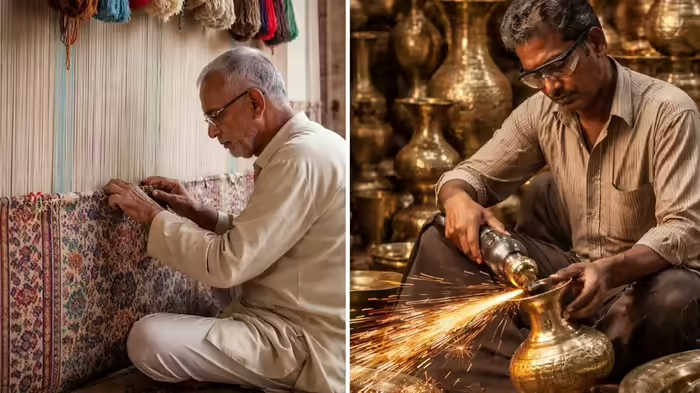
Uttar Pradesh’s traditional craft clusters—Saharanpur’s wood-based handicrafts and furniture, Moradabad’s brassware, and Bhadohi’s carpet industry—are already export-oriented. Post-FTA, improved market access and competitive pricing in Europe are expected to bring steady orders, higher incomes, and enhanced global brand value for artisans. Districts identified under the One District One Product (ODOP) scheme are likely to see focused gains.
Electronics and Manufacturing Ecosystem to Strengthen
The electronics manufacturing hubs of Noida and Greater Noida, which are rapidly emerging as global production centers, will benefit from improved access to the EU’s $744-billion electronics market. The agreement is expected to strengthen electronics, engineering goods, and semiconductor supply chains in Uttar Pradesh, while boosting foreign investment, technology transfer, and demand for skilled manpower.
European Market Opens for UP Farmers
The impact of the India–EU FTA will extend beyond industry. Farmers in western and eastern Uttar Pradesh are also poised to benefit through expanded export opportunities for tea, coffee, spices, fruits, vegetables, dairy products, and processed foods. This will strengthen Farmer Producer Organizations (FPOs), cold-chain infrastructure, food-processing units, and rural employment across the state.
Jobs Boost for MSMEs, Women, and Youth
Uttar Pradesh’s MSME sector is expected to be a key beneficiary of the agreement. Increased export-led production is likely to boost women’s participation, raise artisan incomes, and generate new skilled and semi-skilled jobs for youth. Allied sectors such as logistics, packaging, design, quality certification, and e-commerce will also see fresh employment opportunities.
The India–EU FTA positions Uttar Pradesh as an attractive manufacturing and export hub for European companies. With its expanding expressway network, defence and electronics corridors, industrial parks, and medical device clusters, the state is expected to attract increased EU investment, further accelerating economic growth.
Discover more from SD NEWS agency
Subscribe to get the latest posts sent to your email.