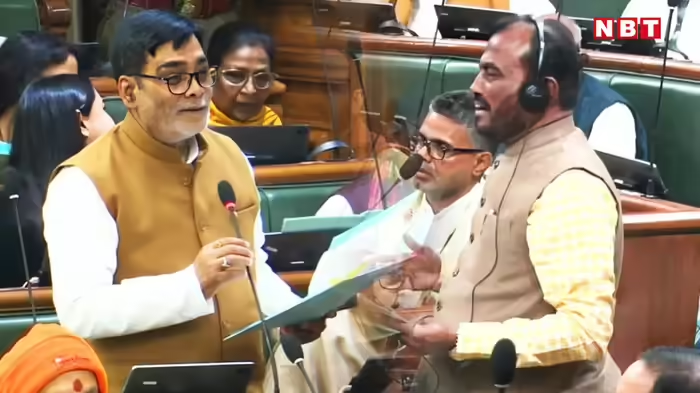
PATNA: The third day of the Bihar Assembly Budget Session 2026 witnessed a rare confrontation within the ruling party itself. JDU legislator Shyam Rajak sharply questioned his own government’s Agriculture Minister Ramkripal Yadav over the problems faced by farmers in Patna, sparking a heated debate in the House. The argument centered on no-entry zones and the shortage of local mandis, with the minister and legislator clashing over the best way to address farmers’ grievances.
Shyam Rajak’s Direct Accusation
Representing Phulwari Sharif, Shyam Rajak raised concerns on behalf of nearly 20,000 registered farmers in Phulwari and Punpun. He highlighted that due to the lack of local mandis and restrictions on entering urban markets, farmers are forced to sell their produce at Musallapur Haat, allowing middlemen to profit while the farmers remain disadvantaged. Rajak demanded clear answers from the minister: will the government establish new mandis in these areas, or leave farmers at the mercy of intermediaries?
Minister Defends Government Efforts
Agriculture Minister Ramkripal Yadav responded by emphasizing the government’s initiatives since the repeal of the APMC Act in 2006, which included modernizing 54 markets into “Model Agricultural Markets” equipped with digital marketing platforms and cold storage facilities. He acknowledged that while the Punpun mandi is being developed, it is not feasible to set up mandis at every location.
The Clash in the House
During the debate, Yadav remarked wryly that he had served as the MP for that area and understood the farmers’ sentiments. “I represent all of Bihar,” he told Rajak. “If the legislator thinks Phulwari is the whole of Bihar, I have nothing to say.” Rajak shot back, asserting that he was asking precise, localized questions, while the minister was giving statewide responses.
The matter was ultimately referred to the Speaker, who instructed the officials to address the concerns under central government schemes.
The exchange highlighted the growing pressures on the government to address grassroots farmers’ issues, even within its own ranks, and underscored the challenges in balancing statewide policies with local demands.
Discover more from SD NEWS agency
Subscribe to get the latest posts sent to your email.