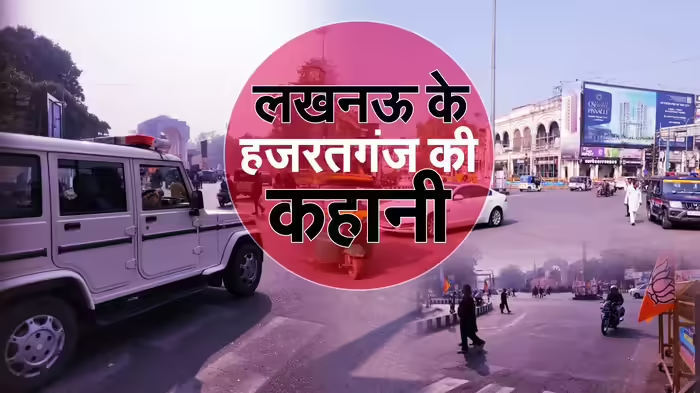
Lucknow, Uttar Pradesh: Known as the heart of Lucknow, Hazratganj is more than just a bustling commercial hub—it is a living testament to the city’s rich cultural and Nawabi heritage. With a history spanning over 200 years, this iconic locality reflects the elegance, refinement, and architectural grandeur of Lucknow’s bygone era.
The Origins of Hazratganj
Hazratganj’s roots trace back to 1810 when Nawab Saadat Ali Khan, the sixth ruler of Awadh (reign: 1798–1814), developed the area to connect Dilkusha to the Residency. Initially, the area housed an grain market at Kotwali, flanked by tamarind trees, and featured a mile-long road with commercial and residential buildings on both sides.
Later, in 1827, Nawab Nasir-ud-din Haider Shah established markets like the China Bazaar and Captain Bazaar, selling goods from China, Japan, and Belgium.
From 1842 to 1847, the area was renamed Hazratganj in honor of Nawab Amjad Ali Shah, popularly known as Hazrat Ali for his religious and philanthropic persona. He oversaw the development of the market and appointed clerics (Maulvis) as heads of judicial and revenue departments. Following his death, he was buried in the Imambara in front of Halwasia Market, cementing the area’s name.
Colonial and Post-Independence Changes
After the 1857 Sepoy Mutiny, the British took control of Lucknow’s administration and rebuilt Hazratganj in the style of London’s Queen Street, replacing several Mughal-era structures with Victorian-style buildings. Among these was the Ring Theatre, which later served as a special court for the Kakori Conspiracy case and was eventually renovated in Gothic style between 1929–1932, complete with a central clock tower.
Architectural Heritage
Hazratganj preserves a blend of Nawabi, colonial, and modern architecture. Landmarks built by Nawabs such as Taron Wali Kothi, Chhoti Chhatar Manzil (now Health Building), Darshan Vilas, and Lal Baradari stand as a testament to Lucknow’s cultural and architectural richness.
The Imambara of Sibtainabad, constructed by Nawab Wajid Ali Shah in memory of Amjad Ali Shah, remains a centrally protected monument, situated opposite Halwasia Market on Mahatma Gandhi Road. The area also hosts the Indian Coffee House, established during World War I, and the historic Sahu Cinema, formerly known as Filmistan Cinema.
Modern-Day Hazratganj
Today, Hazratganj continues to be the commercial and cultural hub of Lucknow, featuring markets, shopping complexes, hotels, cafes, theaters, and offices. It is also conveniently connected to the Lucknow Metro via the Hazratganj station, blending historical charm with modern convenience.
Hazratganj remains not only a center of trade but also a living heritage site, echoing the grandeur of the Nawabs, the impact of colonial administration, and the vibrancy of contemporary Lucknow.
Discover more from SD NEWS agency
Subscribe to get the latest posts sent to your email.