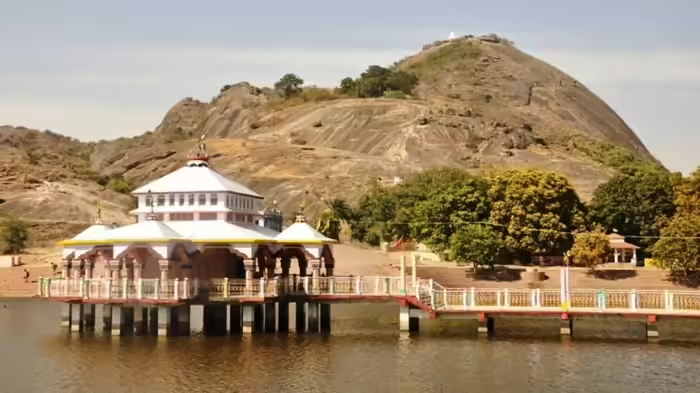
Patna: The city of Bhagalpur in Bihar boasts a rich and ancient history, tracing back over 2,500 years. Once known as Champanagar, Bhagalpur has witnessed centuries of political change and cultural evolution.
Historical Significance
Bhagalpur was historically one of India’s ten most prominent cities. The city’s earlier name, Champa Vati, emerged around the 5th century BCE. Ancient texts refer to it as Bhagdatpuram, meaning “a place of good fortune.” Predominantly inhabited by Angika-speaking people, the region’s fertile plains along the Ganges made it a significant center for ancient Indian rulers and often the scene of territorial conflicts.
Bhagalpur was part of the Anga Mahajanapada, one of the sixteen great realms of ancient India. The capital of this Mahajanapada was Champavati, also known by names such as Malini, Champapuri, Champa Malini, and Kala Malini.
Bhagalpur in Ancient Scriptures
The Atharvaveda mentions Anga Mahajanapada, portraying it as a controversial territory in ancient times. In the Mahabharata, Anga (Champa) is described as a sacred pilgrimage site and the domain of King Anga, the dynasty’s founder. According to the Ramayana, the region is also linked to the legend of Kamdev.
History Hidden in Neighborhood Names
Bhagalpur’s neighborhoods reflect its rich past. For instance:
- Mozahidpur – named after a servant of Emperor Akbar in 1576 CE.
- Sikandarpur – named after Sultan Sikandar of Bengal.
- Tatarpur – after Akbar’s official Tatar Khan.
- Kajvali Chak – named after the renowned Qazi Kajvali during Shah Jahan’s reign.
- Kabirpur – named for Fakir Shah Kabir during Akbar’s period.
- Narga – formerly “Naugja,” meaning a large tomb, honoring soldiers killed in wars during the Khilji era.
- Mandaroza – named after Shah Madar’s shrine, later shortened to Mandaroza.
- Mansurganj – named after Shah Mansur during Akbar’s reign.
- Adampur and Khanjarpur – named after brothers Adam Beg and Khanjar Beg from Akbar’s time.
Several other neighborhoods also carry historical significance, linked to Mughal rulers and local dignitaries:
- Mashakchak – after Mashak Beg of Akbar’s era.
- Husainabad, Husainganj, Mughalpura – connected to Ibrahim Husain, governor of Bengal during Jahangir’s reign.
- Barhpura – settled by twelve families from Sultanpur.
- Fatehpur – named in 1576 CE to commemorate Akbar’s victory over Daud Khan.
- Suja Ganj – named after Shah Suja, brother of Aurangzeb.
- Mundichak – originally Moinuddinchak, named after Khwaja Syed Moinuddin Balkhi during Akbar’s reign, later shortened to Mundichak.
- Khalifa Bagh – named after the scholar Jamal Ullah, known as Khalifa.
A City Where History Lives in Every Corner
From ancient scriptures to neighborhood names, Bhagalpur is a living testament to India’s layered history. Its streets and localities silently narrate tales of kings, emperors, and scholars, preserving the cultural memory of the region across centuries.
Discover more from SD NEWS agency
Subscribe to get the latest posts sent to your email.