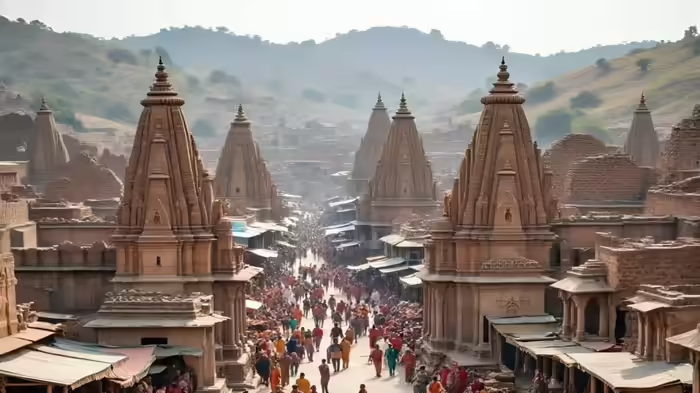
Buxar: Buxar, a city in Bihar, has been a center of power and culture from the Ramayana era to the British period, leaving a significant mark on the region’s history. Its story spans from the Harappan civilization to the Mughal and colonial periods, with the modern city of Buxar evolving from the ancient settlement known as Vyaghrasar.
Ancient Origins and Legends
Historically, Buxar has been known by many names, including Siddhashram, Vedgarbha Puri, Karush, Tapovan, Chaitrath, and Vyaghrasar. The modern name “Buxar” is believed to have originated from Vyaghrasar. Ancient texts and local legends link Buxar to battles involving gods, demons, and later foreign invaders. According to Puranic lore, the site was a battlefield for celestial wars, while in medieval history it became known for conflicts between invaders and locals.
One legend recounts that due to a curse from Rishi Durvasa, the face of Rishi Vedshira’s tiger was restored to its original form after bathing in a sacred pond, later named Vyaghrasar. Another tale says that Rishi Vishwamitra, the family guru of Lord Rama, oversaw an ashram on the banks of the holy Ganga where 80,000 saints struggled against demon attacks. It was here that Lord Rama famously killed the demon Tadaka.
Local lore also suggests that Lord Rama and his younger brother Lakshman received education in Buxar. The site of Ahirouli, six kilometers from modern Buxar, is believed to be where Gautam Rishi’s wife, Ahalya, regained her human form through a single touch of Lord Rama’s feet.
Buxar During the Mughal Era
In the Mughal period, Buxar remained a key historical center. It is remembered for the battle between Humayun and Sher Shah Suri in Chausa in 1539, which significantly shaped regional politics.
Buxar in the British Era
During the British period, Buxar continued to hold strategic importance. On March 23, 1764, under the command of Sir Hector Munro, the British defeated the forces of Mir Qasim, Shuja-ud-Daula, and Shah Alam II at Katakauli, approximately six kilometers from the city. A stone memorial built by the British at Katakauli still stands today as a symbol of the historic battle.
Buxar’s rich tapestry of legends, wars, and cultural milestones makes it not just a city in Bihar but a witness to India’s evolving history from ancient civilizations to colonial rule.
Discover more from SD NEWS agency
Subscribe to get the latest posts sent to your email.