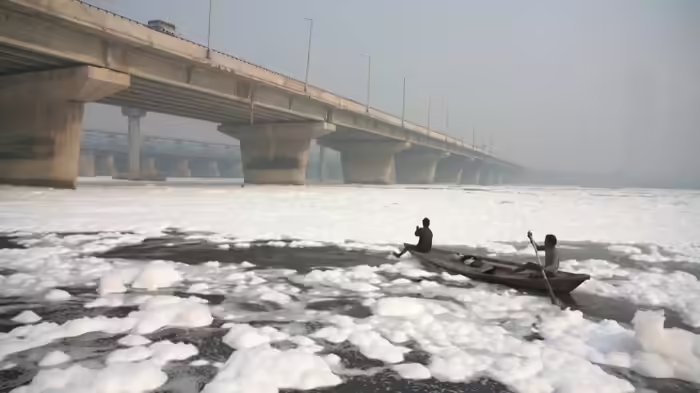
New Delhi: Foam has reappeared in the Yamuna River near Kalindi Kunj, prompting the Delhi Jal Board (DJB) to initiate an investigation. The development comes amid political claims and counterclaims, with the Aam Aadmi Party (AAP) alleging increased pollution after the Chhath festival, while the BJP accused AAP leaders of presenting only a partial picture.
DJB Investigation Underway
Officials from the DJB sent a team to the site to examine the cause of the foam. According to the board, several factors can lead to foam formation: a decrease in dissolved oxygen levels, an increase in toxic matter, and seasonal cold weather. During winter, falling temperatures can further exacerbate the likelihood of foam appearing.
The Kalindi Kunj area has historically seen foam formation due to the design of the barrage constructed by the Uttar Pradesh government, where water falls from a significant height, naturally creating foam. Additionally, the Najafgarh drain releases water into the Yamuna at this location, contributing to the phenomenon. DJB clarified that the foam near Kalindi Kunj does not affect Delhi’s water supply, which relies exclusively on the Wazirabad Water Treatment Plant.
Political Reactions
The AAP has claimed that Yamuna has become more polluted after the Chhath festival. Saurabh Bhardwaj, Delhi AAP convenor, cited a Delhi Pollution Control Committee (DPCC) report showing high fecal coliform levels, arguing that the BJP government’s claims of cleaning the Yamuna are overstated. He highlighted that fecal coliform counts near the ISBT Bridge increased from 21,000 on 9 October 2025 to 49,000 on 6 November.
The BJP, however, countered these claims. Delhi BJP president Virendra Sachdeva accused AAP leaders of presenting only half the truth, noting that under AAP rule, the Yamuna had also recorded high fecal coliform levels. He cited the 22 December 2025 DPCC report, which recorded fecal coliform levels of 92,000 at the ISBT Bridge, but as part of the cleaning efforts, levels dropped to 35,000 at ITO Bridge and 20,000 at Okhla Barrage. He added that in December 2024, dissolved oxygen in the Yamuna was reported at zero.
The DJB continues to monitor the situation closely, aiming to determine the exact causes of the foam while assuring residents that the city’s water supply remains unaffected.
Discover more from SD NEWS agency
Subscribe to get the latest posts sent to your email.