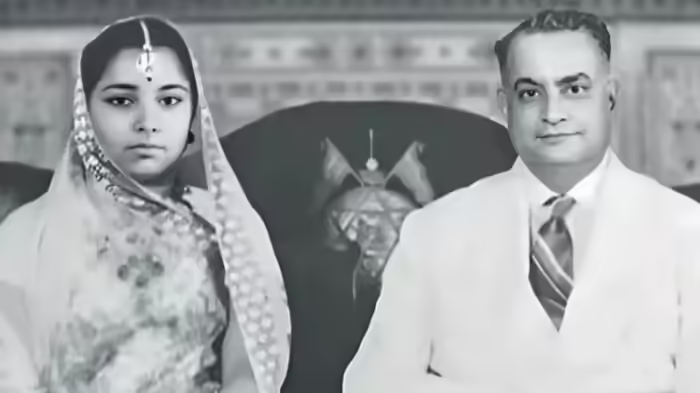
Darbhanga, Bihar: The passing of Maharani Kamasundari Devi, the last queen of Darbhanga Raj, marks the end of a significant chapter in India’s royal history. She and her husband, Maharaja Kameshwar Singh, played a pivotal role in the development of Mithila and the nation. Maharaja Singh was a member of India’s Constituent Assembly (1947–1950), and Maharani Kamasundari Devi was the last surviving spouse of its members.
The royal couple’s philanthropic contributions continue to shape Darbhanga and Bihar. During the Constituent Assembly sessions, Maharaja Singh and Maharani Kamasundari Devi were among the 284 members, signing the original registers of the Indian Constitution and inscribing Darbhanga’s name. Maharaja Singh, elected from Bihar from 1907 to 1962, was the state’s sole representative in the Assembly. With Maharani Kamasundari Devi’s passing, the final living connection to this era of royalty has ended.
Philanthropy and Contributions
The royal family’s generosity left a lasting impact across the country. Darbhanga House in Delhi, donated by the Maharani, now houses the headquarters of the Intelligence Bureau. The Nargona Palace in Darbhanga was donated to Lalit Narayan Mithila University, hosting its postgraduate department. The palace itself was built with advanced technology of the time, including earthquake-resistant construction, air conditioning, and lifts.
During the 1962 India-China conflict, Maharaja Kameshwar Singh donated three aircraft and 600 kg of gold for national defense and also handed over a 90-acre airfield in Darbhanga to the government. His philanthropy extended to education and science: he donated ₹50 lakh to Banaras Hindu University and precious diamonds to Nobel laureate Dr. C.V. Raman to support research. He also contributed property for the establishment of Kameshwar Singh Darbhanga Sanskrit University.
Infrastructure and Development Initiatives
The Darbhanga royal family contributed to regional development through infrastructure projects. In 1874, they established the Tirhut Railway Company, headquartered at Moti Mahal within the Darbhanga Raj complex. The railway line, spanning 55 miles from Bajitpur Terminal to Nargona Terminal, was completed in just 62 days, facilitating transport and reducing migration pressures. They also funded telecommunications infrastructure and donated buildings to Patna University and other educational institutions, including medical colleges in Darbhanga.
Patrons of Arts and Culture
Beyond development and education, the royal family were patrons of music, art, and culture. Eminent musicians such as Padma Shri Ustad Bismillah Khan and Padma Shri Ramchatur Mallik were part of their court, reflecting the family’s enduring commitment to preserving and promoting India’s rich cultural heritage.
With Maharani Kamasundari Devi’s passing, the final living connection to the grandeur and benevolence of Darbhanga Raj has come to an end, leaving behind a legacy that continues to inspire the people of Mithila and India at large.
Discover more from SD NEWS agency
Subscribe to get the latest posts sent to your email.