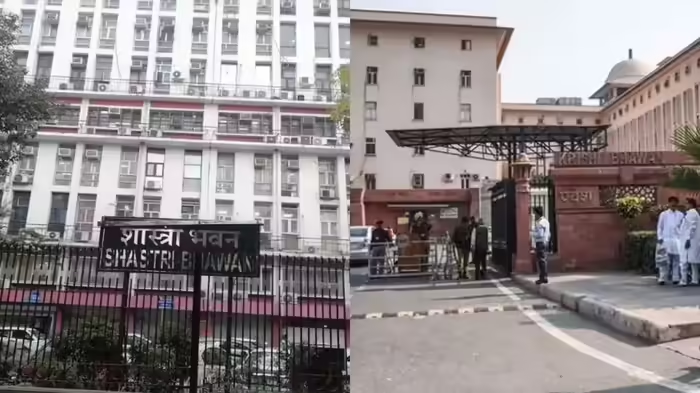
Two historic buildings of the national capital, Krishi Bhavan and Shastri Bhavan, are set to be demolished, marking the end of an era in Delhi’s architectural and administrative history. Both structures played pivotal roles in shaping independent India’s governance and development. In their place, the government plans to construct the fourth and fifth buildings under the Common Central Secretariat (CCS) Project.
A Legacy of Krishi Bhavan
Built in 1957, Krishi Bhavan was designed by architects from the Central Public Works Department and served as the headquarters of the Ministries of Agriculture & Farmers’ Welfare, Rural Development, and Animal Husbandry, Dairy & Fisheries. It was here that India’s Green Revolution strategies were formulated in the 1960s. Eminent agricultural scientists like Dr. M.S. Swaminathan and Mexico’s Norman Borlaug consulted with farmers and scientists at this iconic building. Leaders such as C. Subramaniam, Babu Jagjivan Ram, Sharad Pawar, and Devi Lal also worked from Krishi Bhavan as Agriculture Ministers.
Shastri Bhavan: A Hub of Governance
Constructed in 1967 on Rajendra Prasad Road (formerly Queen Mary Road), Shastri Bhavan housed numerous central government offices, including the Ministries of Education, Law & Justice, Information & Broadcasting, Culture, and Chemicals & Fertilizers. The building was also adorned with striking murals by artist Satish Gujral, adding to its cultural significance.
Human-Animal Harmony
Over the years, hundreds of government employees and a unique troop of monkeys coexisted peacefully within these buildings. Monkeys were often seen sharing spaces and even meals with officials during lunch hours, reflecting a rare harmony between humans and wildlife.
The demolition of these landmarks raises questions about the fate of Gujral’s murals and the resident monkeys, as Delhi prepares for the next phase of modernization with the CCS project.
Discover more from SD NEWS agency
Subscribe to get the latest posts sent to your email.