
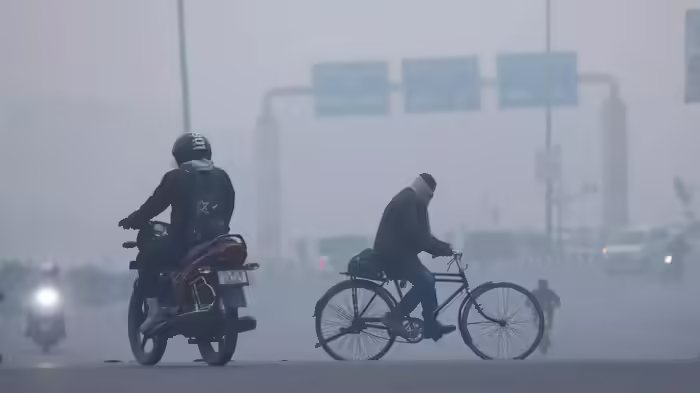
Delhi-NCR continues to reel under an intense cold wave, with the national capital recording a minimum temperature of 4.2 degrees Celsius on Saturday morning, the coldest in the past two years. The biting cold, coupled with dense fog and hazardous air quality, has made life difficult for residents across the region.
According to the India Meteorological Department (IMD), this was the coldest January morning since January 15, 2024, when the minimum temperature had plunged to 3.3 degrees Celsius. Weather data shows that Safdarjung recorded 4.2°C, Palam 4.5°C, Lodhi Road 4.7°C, Ridge station 5.3°C and Ayanagar 4.5°C.
Cold Wave to Persist
The IMD has warned that the cold spell is far from over. On January 10, dense fog prevailed during the morning hours, while the maximum temperature hovered around 17 degrees Celsius. High humidity levels further intensified the chill, worsening fog conditions and trapping pollutants close to the surface.
Meteorologists have forecast that the minimum temperature could dip to around 5 degrees Celsius on January 11, with similar cold and foggy conditions likely to continue on January 12. Although no official weather warning has been issued for these days, early morning and late evening hours are expected to remain harsh.
Why Is Delhi Getting Colder?
Weather experts attribute the sharp drop in temperature to the activation of north-westerly winds, which are bringing cold air from the Himalayan region into the plains. Clear night skies and low wind speeds are also contributing to rapid heat loss, leading to colder mornings.
Pollution Adds to the Trouble
Despite light rainfall on Friday, air quality across Delhi-NCR showed no significant improvement. Several areas in Delhi, Noida and Ghaziabad reported Air Quality Index (AQI) levels above 400, placing them in the “severe” category.
As per the Central Pollution Control Board (CPCB), AQI levels between 0–50 are considered ‘good’, 51–100 ‘satisfactory’, 101–200 ‘moderate’, 201–300 ‘poor’, 301–400 ‘very poor’, and 401–500 ‘severe’.
With cold winds, dense fog and toxic air combining into a dangerous mix, authorities have advised people—especially children, the elderly and those with respiratory ailments—to limit outdoor exposure during early morning and late evening hours. Delhi is expected to remain in the grip of severe winter conditions for the next few days.
Discover more from SD NEWS agency
Subscribe to get the latest posts sent to your email.