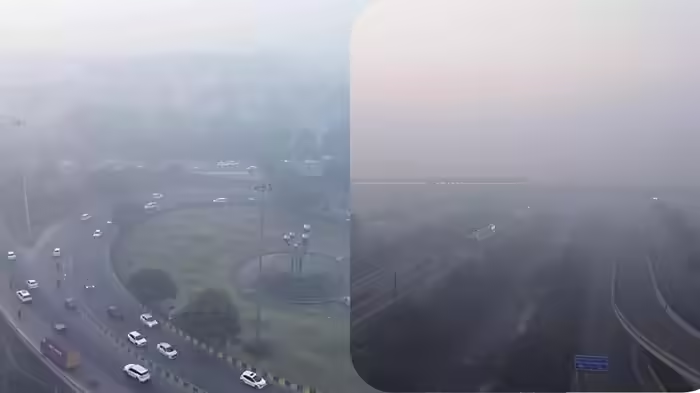
New Delhi: A severe cold wave continues to grip Delhi and the broader northern region, with Thursday recording the coldest morning in the national capital since January 2023. The Safdarjung Observatory, Delhi’s primary weather monitoring station, recorded a minimum temperature of just 2.9°C, while Palam dropped to 2.3°C, Lodhi Road settled at 3.4°C, R.K. Puram at 4.5°C, and I.N. Nagar at 2.7°C.
The low in Palam marks the coldest since 2010, highlighting the persistence of the current cold wave across the city. Forecasts indicate that these frigid conditions may continue into Friday, affecting daily life and outdoor activities.
Air Quality Reaches Dangerous Levels
Compounding the weather woes, air pollution across Delhi-NCR has surged to hazardous levels. According to the Central Pollution Control Board (CPCB), Delhi’s Air Quality Index (AQI) reached 349, categorised as ‘very poor.’ Greater Noida consistently ranked among the most polluted areas, with AQI readings exceeding 350 across multiple sectors.
Within Delhi, AQI levels have soared to alarming heights: Chandni Chowk at 384, Ashok Vihar 376, Bawana 373, Punjabi Bagh 386, Okhla Phase-2 383, Pusa 399, and Nehru Nagar 397. Even Anand Vihar (345) and Alipur (332) recorded very poor air quality, while Mathura Road registered 259, still in the ‘poor’ category.
NCR regions are equally affected. In Ghaziabad, Sanjay Nagar logged an AQI of 312, and Indirapuram reached 282, indicating widespread pollution. The Indian Meteorological Department (IMD) has issued a cold wave alert for the NCR, warning of dense fog during early mornings and persisting through the day in several areas.
The combination of severe cold and hazardous air quality poses a serious health risk, particularly for the elderly, children, and individuals with respiratory conditions, underscoring the urgent need for public caution.
Discover more from SD NEWS agency
Subscribe to get the latest posts sent to your email.