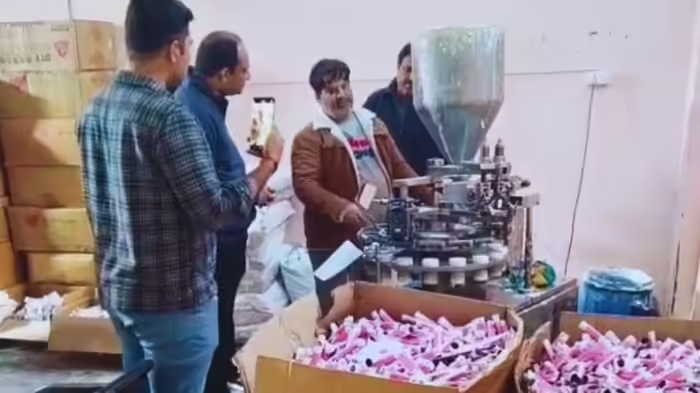
Ghaziabad: The exposure of a fake medicines manufacturing unit in Loni, Ghaziabad, has raised serious questions about the functioning and preparedness of the local Drug Control Department. Ironically, while the department continued its routine surveillance, it was the Delhi Police Crime Branch that cracked the case, uncovering a well-established illegal network operating for a long time.
Long-Running Racket, But No Local Detection
According to officials, the counterfeit drug network dismantled in Loni had been active for months, if not longer. Despite this, the Ghaziabad Drug Department failed to trace the operation, highlighting glaring gaps in its monitoring mechanism and intelligence capabilities.
The fact that an external agency had to intervene has triggered criticism of the department’s effectiveness in curbing one of the most dangerous forms of organized crime—fake medicines.
Only Two Drug Inspectors for a Massive District
Ghaziabad, one of Uttar Pradesh’s most populous and commercially active districts, has only two drug inspectors to oversee pharmaceutical manufacturing, storage, and sales. Official records show that the district has over 5,000 medical stores and more than 500 wholesale drug dealers, making effective supervision nearly impossible with such limited manpower.
Lack of Technology Hampers Action
Drug Inspector Ashutosh Mishra admitted that the department lacks modern tools such as call tracing, digital surveillance, and location-tracking technology. As a result, even when tip-offs are received, swift action becomes difficult. In contrast, the Delhi Police benefited from advanced technical resources, enabling them to act faster and dismantle the illegal factory.
Border Location Favours Criminal Networks
Loni’s location along the Delhi–Ghaziabad border has long made it a vulnerable zone for illegal activities. Criminals often exploit jurisdictional overlaps between states and agencies, allowing fake drug operations to remain undetected for extended periods.
Major Pharma Hub, Weak Oversight
Ghaziabad’s Nai Basti Medicine Market is a major wholesale hub supplying medicines to several neighbouring districts. The district also hosts over 300 authorised distributors of leading pharmaceutical companies. Despite this significant pharmaceutical presence, regulatory oversight remains critically weak.
Pattern of External Inputs
This is not the first instance where action was triggered by outside intelligence. On November 3, a consignment of counterfeit cough syrup worth ₹3.5 crore was seized from a fish warehouse on Meerut Road—again based on inputs from Sonbhadra Police, not local surveillance.
Focus Limited to Licensed Shops
Sources allege that the Drug Department’s enforcement largely remains confined to routine inspections of licensed medical stores, while illegal manufacturers, unregistered warehouses, and underground supply chains continue to operate beyond its reach.
Growing Demand for Systemic Reform
In the wake of repeated incidents, demands are growing louder for urgent reforms. Experts and officials alike are calling for increased staffing, access to modern investigative technology, and a robust intelligence network to combat the life-threatening trade of counterfeit medicines.
The Loni bust has once again exposed the urgent need to strengthen regulatory enforcement—because when it comes to fake drugs, administrative delay can cost lives.
Discover more from SD NEWS agency
Subscribe to get the latest posts sent to your email.