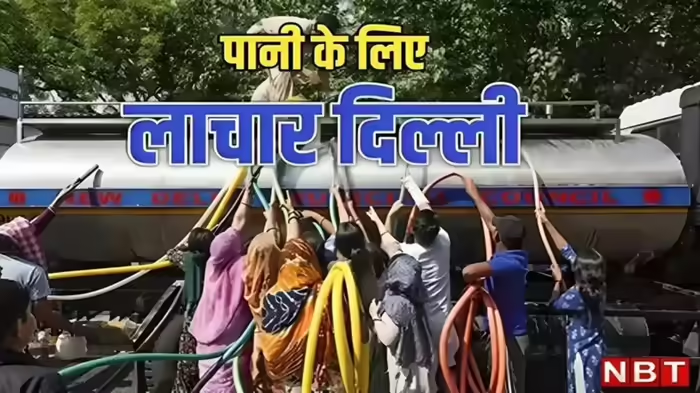
New Delhi: Residents of 20 Delhi Assembly constituencies, totaling around 2.2 million people, are facing severe water shortages due to reduced output from the Wazirabad and Chandrawal Water Treatment Plants. The crisis stems from elevated ammonia levels in the Yamuna River, which remain five times higher than normal.
According to officials, the ammonia level in the Yamuna was recorded at 5 parts per million (ppm) on Friday, while normal levels should be around 0.9–1 ppm. Until the levels drop, both plants are unable to access adequate raw water, limiting their supply capacity.
The Wazirabad Water Treatment Plant, covering an area of 123 sq km, supplies water to 11 Assembly constituencies including North, Central, and Old Delhi, with a daily output of 131 million gallons per day (MGD). The Chandrawal Plant supplies 95 MGD to nine constituencies over an area of 96 sq km. Both plants source raw water from the Yamuna via the Wazirabad Reservoir.
Officials noted that while a twin line from Haiderpur is in place to channel canal water to the plants, insufficient water flow from the Munak Canal has disrupted supply, reducing production drastically.
Areas Served by Wazirabad Plant: Sanjay Gandhi Transport Nagar, Burari, Model Town, Keshav Puram, Punjabi Bagh, Shakur Basti, Jahangirpuri, Poaragarhi, Avantika, Pitampura, Shalimar Bagh.
Areas Served by Chandrawal Plant: Sarai Rohilla, Gulabi Bagh, Naraina Vihar, Nehru Nagar, Baljit Nagar, Prem Nagar, Punjabi Basti, Sadar Bazaar, Karol Bagh, Paharganj, Patel Nagar, Jhandewala, Bapa Nagar, Dev Nagar, Old Rajendra Nagar, Kashmiri Gate, RK Puram, Turkman Gate.
Authorities have warned residents to prepare for continued shortages until water quality in the Yamuna improves.
Discover more from SD NEWS agency
Subscribe to get the latest posts sent to your email.