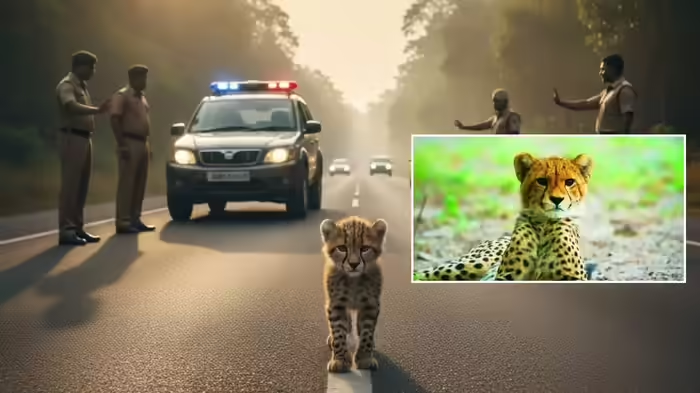
A tragic incident near Gwalior has triggered a heated legal debate after a speeding car fatally hit a cheetah cub on the Agra–Mumbai National Highway, prompting the Forest Department to register a case under some of the strictest provisions of the Wildlife Protection Act. The accident occurred on Sunday morning near Kuno National Park, an area known for frequent wildlife movement.
The incident has raised an important question: Can accidental wildlife deaths be treated as ‘hunting’ under Indian law—even when there is no intent?
Forest Department Invokes Harsh Provisions
Following the cub’s death, officials lodged a case under Sections 9, 39, and 51 of the Wildlife Protection Act. These provisions deal with:
- Section 9: Prohibition of hunting of animals listed under Schedules I–IV
- Section 39: Declaring the body parts of such animals as government property
- Section 51: Penalties—up to seven years in jail
Forest officers say these sections are automatically applied whenever a Schedule I species dies due to human activity, regardless of intent.
Police Tracking Suspect Vehicles
Based on CCTV footage, police initially detained a car heading towards Rajasthan but later found it had no link to the incident. Investigators have now identified four other vehicles that passed the location around the same time—two from outside Madhya Pradesh and two from within the state.
Teams are analysing tire marks, CCTV footage, and toll-booth records to pinpoint the vehicle responsible.
Legal Questions Spark Controversy
The application of non-bailable sections for what appears to be an accident has drawn criticism from legal experts. Senior advocate Pankaj Dubey argues that the Wildlife Act should be applied with caution.
“An accident is an accident. No driver sets out intending to kill wildlife on a highway. Treating such cases as ‘hunting’ may amount to unjust harassment,”
Dubey said.
He added that if rash driving, speeding, intoxication, or negligence is established, action should be taken under the Indian Penal Code (IPC) or the Motor Vehicles Act—but proving “intent” is essential for hunting charges.
Courts Have Ruled on Similar Issues Before
The controversy mirrors the 2024 Madhya Pradesh High Court ruling that quashed criminal proceedings against Jabalpur resident Santosh Kumar Patel. Patel had been booked under Sections 9, 39, and 50 after his car accidentally hit a sambar deer in 2022.
The court examined:
- Section 9 (ban on hunting)
- Definition of hunting in Section 2(16)
- Requirement of mens rea (criminal intent)
It concluded that accidental collisions on public roads where wildlife frequently roam cannot automatically be treated as hunting.
The bench also cited a Kerala High Court ruling, which held that injuries caused to an elephant during negligent vehicle transport did not constitute “hunting.”
Debate Continues
While the Forest Department insists on strict enforcement to protect endangered species like the cheetah, legal experts emphasise the need to distinguish between deliberate harm and unintentional accidents.
The investigation into the incident is ongoing, and further clarity is expected as officials identify and question the suspected vehicles.
Discover more from SD NEWS agency
Subscribe to get the latest posts sent to your email.