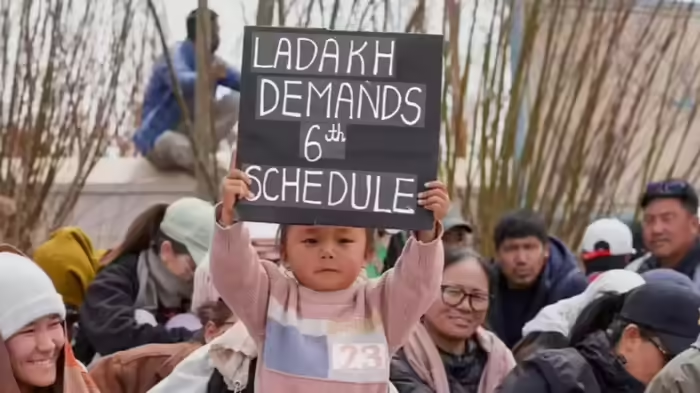
Jammu: The central government has refused to grant Sixth Schedule status or statehood to Ladakh, declining demands from the region’s political organizations, including the Leh Apex Body (LAB), Kargil Democratic Alliance (KDA), and Ladakh Buddhist Association. Instead, the government proposed the creation of an autonomous territorial council, which the Ladakhi groups have rejected, raising objections to the reasoning of the Home Ministry’s high-powered committee.
The Proposal and Its Rejection
Following a meeting with the high-powered committee led by Union Minister of State for Home Affairs Nityanand Rai, KDA Co-Chairman Asgar Ali Karbali stated that the government offered a territorial council model. The proposal included giving the Chief Executive Councillor of the Ladakh Autonomous Hill Development Council the status equivalent to a Chief Minister, and the Deputy Chief Executive Councillor the rank of Deputy Chief Minister. However, these assurances failed to satisfy the Ladakhi groups, who insisted on stronger constitutional protections under the Sixth Schedule.
Karbali also noted that committee officials argued that the Sixth Schedule is “largely weakened” today, and that Ladakh lacks sufficient financial resources to justify statehood. The groups, however, disagreed, pointing out that the Supreme Court has repeatedly recognized the Sixth Schedule as a robust legal and constitutional safeguard.
Internal Disagreements
The KDA member Kunjess Dolma initially supported the council proposal but changed her stance during the February 4 meeting, stating satisfaction with Ladakh’s current union territory status. Karbali emphasized that any attempt to undermine Ladakhi identity would not be tolerated.
The Ladakhi organizations continue to demand full constitutional safeguards akin to those provided to tribal areas in Northeast India, rejecting the government’s territorial council model as insufficient.
Discover more from SD NEWS agency
Subscribe to get the latest posts sent to your email.