In Bihar’s Muzaffarpur district, poverty-stricken families are being pushed into a deadly debt trap as illegal microfinance companies—locally dubbed “Gunda Banks”—continue to operate unchecked, exploiting the weakest sections of society. Charging exorbitant interest rates and using intimidation tactics, these unregulated lenders have turned entire villages into zones of fear, with a disturbing rise in suicides linked to loan recovery harassment.
Despite the presence of only 22 registered microfinance companies in the district, dozens of illegal entities are functioning openly, exposing serious administrative lapses. These lenders, masquerading as legitimate microfinance institutions, reportedly charge up to 30 percent interest and deploy criminally inclined recovery agents to coerce repayments.
Sakra Block Turns into Suicide Hotspot
The crisis is most acute in Sakra block, which has emerged as the epicentre of illegal lending. According to local reports, nearly 80 non-banking financial entities are operating in this block alone, most without any valid license. Their methods resemble those of organised crime syndicates rather than financial institutions.
A recent tragedy in Navalpur Mishrauliya village sent shockwaves across the district. Deepa, wife of a daily-wage labourer, allegedly died by suicide along with her two minor daughters, unable to withstand the relentless pressure from loan recovery agents. She had borrowed money from institutions operating under the names Bharat Finance and SKMS Microfinance. Neighbours allege that public humiliation, threats, and mental torture by recovery agents drove her to the extreme step.
Harassment, Humiliation and Forced Asset Sales
When families fail to pay instalments, recovery agents—often with criminal backgrounds—are sent to their homes. Women are allegedly abused and humiliated in public, forcing families to sell ration supplies, jewellery, household utensils, and even mortgage land to survive. These practices have left already vulnerable families completely shattered.
Last year, a similar incident occurred in Bajidpur village, where Shivnath Das and his wife Bhukhli Devi ended their lives due to mounting debt pressure. Yet, no decisive action was taken against the responsible companies, raising serious questions about administrative accountability.
Administrative Apathy Under Scanner
Senior officials admit the scale of the problem. Deputy Collector Vikas Kumar confirmed that while only 22 companies are officially registered, the number of illegal operators is “far higher.” As per norms, coordination meetings at the block level should be held every month to monitor microfinance activity. However, the absence of recommendations from Block Development Officers (BDOs) against illegal lenders points to systemic failure—or silent complicity.
Villages like Rupanpatti reportedly host secret meetings of these lenders, yet police action remains minimal. Although SSP Sushil Kumar has assured an investigation, ground-level action against companies and recovery agents has been painfully slow.
Government Warning, Action Awaited
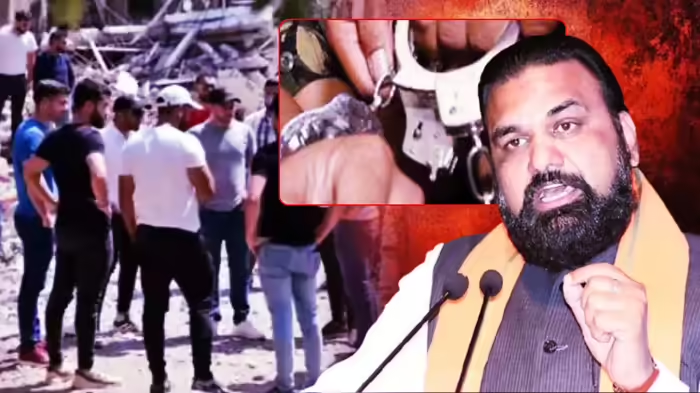
Seven days ago, Bihar Home Minister Samrat Choudhary publicly declared that illegal “Gunda Banks” would be eliminated and only RBI-approved banks would be allowed to operate in the state. He also announced the installation of AI-based surveillance cameras across Bihar to strengthen law and order. However, in Muzaffarpur, the situation on the ground remains alarming, with little visible enforcement so far.
Economic Offences Unit Steps In
Following a series of suicide cases, including a shocking incident where a father died by suicide along with his three daughters, the Economic Offences Unit (EOU) has been directed to take strict action. Cases involving NBFCs and illegal deposit schemes will be investigated under the Banning of Unregulated Deposit Schemes Act, 2019. Authorities have decided to fast-track investigations and file charge sheets swiftly, while false complaints will be closed after verification.
A Race Against Time
For Muzaffarpur’s poor, the crisis has reached a breaking point. Unless immediate and stringent action is taken against these “merchants of death,” many more families may be driven to irreversible tragedies. The district now stands as a grim reminder that unchecked financial exploitation can be just as lethal as any weapon—silently destroying lives, one loan at a time.
Discover more from SD NEWS agency
Subscribe to get the latest posts sent to your email.