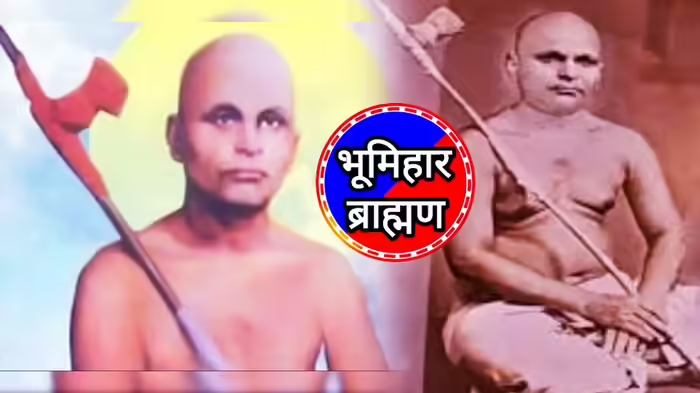
Patna, Bihar: The mention of Bhumihar Brahmins in the recent caste census in Bihar has sparked significant debate, prompting objections and review by the government through the Backward Classes Commission. The history of the Bhumihar Brahmins, however, reveals a deeply rooted and culturally rich legacy that predates modern disputes.
Swami Sahajanand Saraswati: Scholar and Social Reformer
Swami Sahajanand Saraswati, a renowned scholar of Sanskrit, social reformer, and leader of the peasant movement, conducted extensive research into the origins and history of the Bhumihar Brahmin community. His seminal work, Brahmarshi Vansh Vistar, provides a comprehensive account of the community, referencing British-era documents, gazetteers, and census records from 1865 and 1911.
Origins of the Term ‘Bhumihar’
According to British scholar William Crook (1896) in The Tribes and Castes of North Western Provinces and Oudh, the term ‘Bhumihar’ is derived from Sanskrit, where bhu means land and haar means possessor. Historically, Bhumihars were land-owning Brahmins, often called Zamindar Brahmins, Grihastha Brahmins, or even western Brahmins. The 1911 census officially recognized the term Bhumihar Brahmin.
The Sanskrit term Bhumihar is synonymous with Zamindar (landowner), reflecting a distinction created by land-owning Brahmins seeking to assert their identity apart from traditional priestly roles.
1913 All India Bhumihar Brahmin Association Conference
In 1913, a conference in Ballia (UP) organized by Hathu Naresh aimed to unite the Bhumihar Brahmin community. Swami Sahajanand Saraswati delivered a research-based speech highlighting the social and historical position of Bhumihars. Following this, he started publishing Bhumihar Brahmin Patrika in 1914, which he edited until 1916.
Promotion of Priestly Duties and Sanskrit Education
Swami Sahajanand Saraswati encouraged Bhumihar Brahmins to perform priestly functions alongside agriculture, emphasizing unity within the community. To guide them, he authored Karmakalap, a 1,200-page manual detailing Hindu rituals from birth to death in Sanskrit and Hindi, published in 1926.
Bhumihars as Priests Across Districts
Research conducted between 1915–1920 revealed that Bhumihars in districts like Hazaribagh (Itkhori and Chatra) acted as priests for Rajputs, Kayasths, and other Brahmin families, conducting marriages, religious ceremonies, and major yajnas.
Brahmarshi Vansh Vistar: A Scholarly Record
Swami Sahajanand Saraswati’s Brahmarshi Vansh Vistar (1925) chronicles the history of Bhumihars and their equivalent sub-castes across India. The Tyagi Brahmins of UP, for instance, are considered equivalent to Bhumihars. The 1926 All India Bhumihar Brahmin Conference in Patna further solidified the community’s social identity.
Ancient References and Historical Significance
Ancient texts like the Skanda Purana describe Brahmins assuming rulership after Lord Parshuram eliminated Kshatriyas 21 times, highlighting the dual roles of Bhumihars as both landholders and custodians of religious duties. The distinction between Yachak (ritualistic priests) and Ayachak (land-owning Brahmins) further explains the evolution of the Bhumihar identity.
Life of Swami Sahajanand Saraswati
Born in 1889 in Devagram, Ghazipur, Swami Sahajanand Saraswati was a prodigious scholar, completing six years of primary education in three. He became a renunciate in 1907 and mastered Sanskrit grammar and Nyaya Mimamsa by 1912. His efforts in Sanskrit education, supported by public and royal patronage, included founding Gurukuls and promoting literacy across Bihar and UP.
Legacy and Final Honors
Swami Sahajanand Saraswati founded the Sitaram Ashram in Bihta, Patna in 1937 and actively participated in the Salt Satyagraha, serving six months in Hazaribagh jail. He passed away in 1950 due to paralysis. His mortal remains were laid in Gandhi Maidan, Patna, for public homage, attended by a massive crowd including the then Chief Minister Shri Krishna Singh and members of his cabinet. Even President Rajendra Prasad sent condolences, marking the national significance of his contributions.
Discover more from SD NEWS agency
Subscribe to get the latest posts sent to your email.