
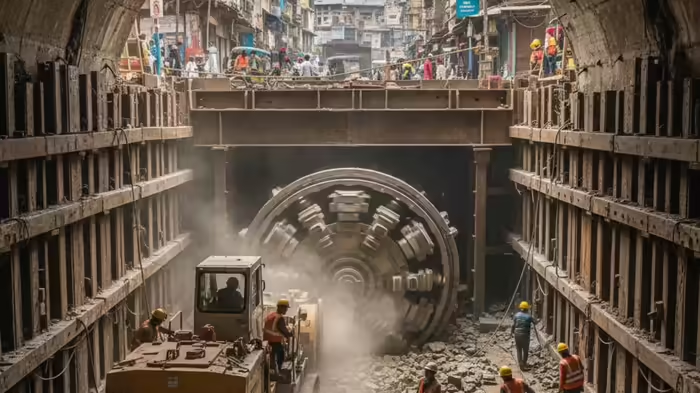
The Bhopal Metro project is set to enter a historic new phase as construction begins on the city’s first-ever underground metro corridor, marking a major milestone in Madhya Pradesh’s urban infrastructure journey. Beneath the narrow lanes and heritage structures of Old Bhopal, metro tunnels will soon be carved nearly 65 feet below the surface, redefining mobility in the state capital.
While metro trains have already started operations on elevated stretches, the challenge of navigating the densely populated and historically sensitive Old City has led planners to opt for an underground alignment. This ambitious section of the Orange Line will showcase cutting-edge engineering and world-class tunnelling technology.
Underground Corridor Through the Heart of Old Bhopal
The underground stretch will extend approximately 3.39 kilometres, running from Pul Pataara to Bada Bagh Sindhi Colony. Constructed at a depth of 19 to 20 metres, the corridor has been carefully designed to protect Old Bhopal’s heritage buildings, congested streets, and residential areas. Engineers say the advanced tunnelling method will ensure minimal surface disruption, noise, and vibration—an essential requirement in such a sensitive urban zone.
Once operational, this underground route is expected to significantly reduce traffic congestion and provide seamless connectivity across some of the city’s busiest areas.
₹100-Crore ‘Earth-Cutting’ Machines Deployed
To execute the project, two massive Tunnel Boring Machines (TBMs)—each costing nearly ₹100 crore—have arrived in Bhopal from Bengaluru. These state-of-the-art machines are capable of boring twin tunnels with a diameter of 5.8 metres, simultaneously excavating and reinforcing the tunnel structure.
According to metro officials, assembly and technical testing of the TBMs are currently underway. Full-scale tunnelling operations are scheduled to begin in March 2026. Once operational, each machine will advance at an average speed of 15 metres per day, ensuring precision, safety, and structural stability throughout the excavation process.
Key Underground Stations Planned
Two of Bhopal’s busiest transit hubs—Bhopal Railway Station and Nadra Bus Stand—will be developed as underground metro stations on this route. Preliminary excavation work at both locations is already progressing at a rapid pace.
This underground connectivity will not only improve access to the Karond area but will also allow passengers to step directly from the railway station onto the metro, greatly enhancing intermodal transport within the city.
A Model for Future Urban Mobility
Officials believe this underground corridor will serve as a blueprint for future metro expansions in Bhopal and other cities of Madhya Pradesh. With this project, Bhopal is positioning itself alongside major global cities that rely on advanced underground transit systems to balance development with heritage conservation.
As the city prepares to dig deep—both literally and technologically—the Bhopal Metro promises to illuminate a new path toward sustainable, modern urban transport.
Discover more from SD NEWS agency
Subscribe to get the latest posts sent to your email.