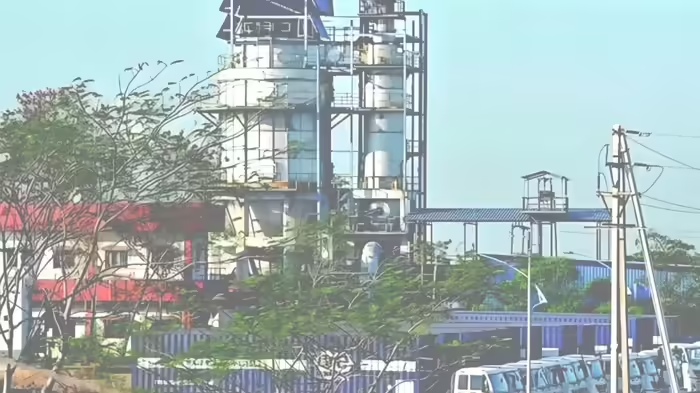
Bhopal: Forty-one years after the Bhopal gas disaster, a fresh environmental crisis has erupted. The toxic ash generated from burning hazardous waste at the Union Carbide site has become a bigger challenge than the waste itself. With 899 tonnes of ash lying unused in leak-proof containers and no approved site for disposal, the process has come to a standstill — triggering public outrage and administrative confusion.
899 Tonnes of Toxic Ash, No Place to Go
In May and June this year, 337 metric tonnes of hazardous waste from the Union Carbide factory was incinerated at a Pithampur treatment plant. The 55-day incineration process produced a staggering 899 metric tonnes of ash and residue — nearly three times the weight of the original waste.
Months later, the ash remains stored inside a shed, waiting for scientific disposal. Officials say the state pollution control board now faces a major challenge in handling this enormous volume.
High Court Halted Earlier Plan
In October, the Madhya Pradesh High Court rejected the state government’s proposal to store the ash 500 metres away from human settlements.
The ruling stalled the disposal process entirely. Officers say the decision has left the department with “no clear roadmap” for moving forward.
Confusion Stalls Disposal Operation
A senior Pollution Control Board official, requesting anonymity, said the entire process has been paralysed due to unclear guidelines following the court’s decision.
Unseasonal rains in October delayed the construction of a landfill, and the High Court’s directions added further uncertainty.
What the Court Directed
The Court has not banned disposal — but asked the government to identify a new location, far from human habitation and water bodies.
Officials claim finding such a site is a complex and time-consuming task. The original plan was to complete landfill construction by November and finish the disposal by December.
Environmental Concerns Rising
Local groups in Pithampur, where the ash was initially expected to be disposed of, are fiercely opposing the plan. They argue that the site is unsafe and inadequate for storing such high-risk waste.
Hemant Hirole, convenor of the Pithampur Bachao Samiti, said:
“This toxic ash is nothing less than a nuclear bomb for future generations. The High Court has clearly said this site is unsafe. Disposal here will not be allowed.”
New Site Search Begins
With strong community resistance, court restrictions, and administrative confusion, the government is now scouting for a fresh disposal location. Until then, nearly 900 tonnes of toxic ash will continue to sit in storage — a grim reminder of a disaster that refuses to end.
Discover more from SD NEWS agency
Subscribe to get the latest posts sent to your email.