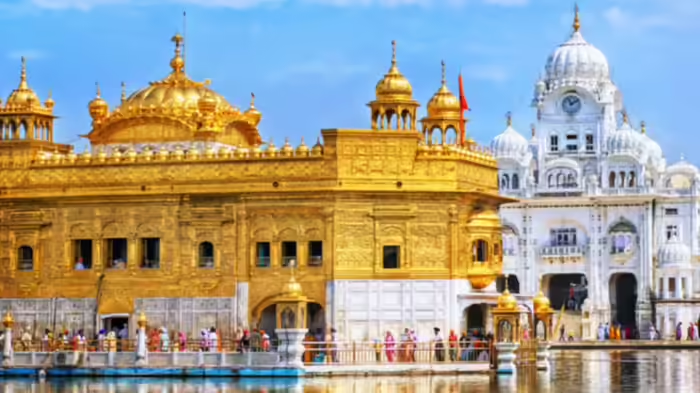
Amritsar: The Punjab government has declared three cities, including the walled city of Amritsar, as ‘Sacred Cities’. Following this declaration, authorities have begun preparations to remove shops and street vendors selling meat, fish, eggs, alcohol, and tobacco products from the historic old city area surrounding the Golden Temple and Akal Takht.
The decision, announced by Chief Minister Bhagwant Mann on 21 December through a video message, aims to preserve the sanctity of these areas. Alongside Amritsar, Anandpur Sahib and Talwandi Sabo (Bathinda) have also been declared sacred.
Impact on Local Businesses
The move has caused significant concern among hundreds of families whose livelihoods depend on these trades. Traders argue that the decision threatens generations-old businesses without providing alternatives. Rajinder Kumar, a fourth-generation fish trader operating inside Hall Gate, described the situation as “catastrophic.” His wholesale fish market, the first of its kind in Punjab, supplies fish to multiple districts. Each shop employs over 40 workers, and a single order cancellation could wipe out years of family efforts.
Merchants Raise Objections
Manmohan Singh, owner of a restaurant inside BK Datt Gate, questioned the rationale behind extending the restrictions across the entire walled city, noting that a dedicated corridor near the Golden Temple already observes such prohibitions. He added, “Amritsar is not just a religious city; it is world-renowned for its food. Yet, no alternative has been offered to those affected.”
Hotels Welcome the Decision, But Warn of Consequences
Representatives from the hotel industry welcomed the decision’s intent but acknowledged its uneven impact. AK Chattha, President of the Amritsar Hotel and Restaurant Association, said, “Hotels can adapt by sourcing meat from outside. However, this may inadvertently promote illegal trade and corruption, while only meat, fish, and tobacco vendors bear the brunt.”
Inside the walled city, there are around 225 hotels and guesthouses, some of which serve alcohol illegally. Small vendors, such as Motiram, who sell paan and bidis, expressed despair. “I have spent my entire life selling paan and cigarettes here. This sudden decision has pulled the ground from under my feet. Moving elsewhere is uncertain; I don’t know if my business will survive,” he said.
The move to declare Amritsar a sacred city has thus sparked debate, balancing the city’s religious sanctity against the livelihood of its residents.
Discover more from SD NEWS agency
Subscribe to get the latest posts sent to your email.