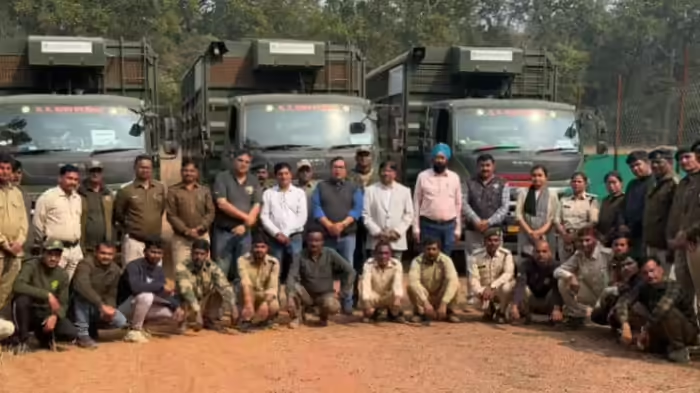
Bandhavgarh, Madhya Pradesh: In a significant step to strengthen the population of Indian Gaur, the second phase of the Gaur Reintroduction Program at Bandhavgarh Tiger Reserve was successfully completed on January 26, 2026. A total of 27 Indian Gaur (5 males and 22 females) were transported over a distance of 593 kilometers from Satpura Tiger Reserve to Bandhavgarh in specially designed vehicles.
A Regal Return of the ‘Indian Bison’
The relocation program, which began on January 22, 2026, involved over 210 forest officers and staff from both Satpura and Bandhavgarh Tiger Reserves. The carefully coordinated operation ensured the safety and well-being of each Gaur during the long journey. At times, accommodating two to three animals per vehicle posed challenges, but veterinarians and forest officers closely monitored all animals. On arrival, the Gaur were settled in specially constructed enclosures in the Kallwah sector of Bandhavgarh.
Expert Team and Extensive Supervision
Dr. Anupam Sahay, Field Director of Bandhavgarh Tiger Reserve, said the project was a major undertaking. Over 150 officers from Satpura and more than 60 from Bandhavgarh participated, along with nine renowned wildlife veterinarians from across the state. The mission was led by Satpura Field Director Rakhi Nanda, whose leadership and round-the-clock efforts ensured the program’s success.
Conservation Efforts to Restore Gaur Population
Indian Gaur had disappeared from Bandhavgarh in 1998, making this program critical for species restoration. Previously, 50 Gaur were relocated from Kanha in 2010-11, and 22 Gaur from Satpura in February 2025. The relocated Gaur are now adjusting well to their new environment.
Collaborative Initiative
The relocation project was conducted in collaboration with the Government of India, Madhya Pradesh Forest Department, Wildlife Institute of India (WII), and other conservation organizations. The program, officially titled “Population Management Strategies for Gaur: Supplementation of Gaur in Bandhavgarh Tiger Reserve, Madhya Pradesh,” is part of ongoing efforts to ensure the long-term survival of this majestic species in the region.
Discover more from SD NEWS agency
Subscribe to get the latest posts sent to your email.