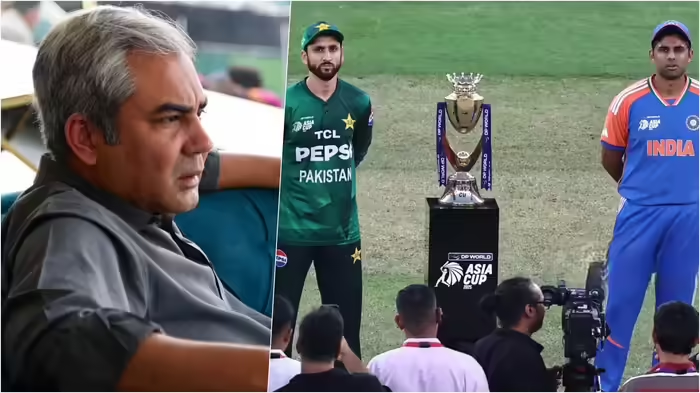
The debate over whether Pakistan will participate in the T20 World Cup 2026 appears to be nearing its conclusion. Pakistan had earlier threatened to boycott the tournament in protest of Bangladesh’s exclusion, but the Pakistan Cricket Board (PCB) has now left the decision largely in the hands of the government. PCB Chairman Mohsin Naqvi met with Prime Minister Shehbaz Sharif on January 26, with a decision expected either on Friday (January 30) or Monday (February 2).
Despite initial uncertainty, multiple factors suggest that Pakistan is unlikely to withdraw from the tournament, which will be jointly hosted by India and Sri Lanka. Here’s a look at five key reasons why Pakistan will almost certainly play:
1. Maintaining Relations with ICC and Other Nations
Naqvi reportedly told the Prime Minister that Pakistan’s cricketing future must remain a priority. According to insiders, the PCB aims to safeguard international relations with the ICC and other member countries while ensuring the stability and growth of the national team. Maintaining good relations with the global cricketing community is seen as a strategic priority.
2. Government Intervention Is Unlikely
Contrary to media speculation, Pakistan is not expected to boycott its Group-A match against India. PCB insiders dismissed reports claiming that the government could prohibit the team from facing India in Sri Lanka. Historically, India has refrained from sending teams to Pakistan, but neutral venues like ICC events or Asia Cup tournaments have continued unaffected. Likewise, Pakistan’s government has consistently maintained that politics should not interfere with cricket.
3. Travel Plans Are Already Finalized
The PCB has already booked flights and arranged logistics for its team to travel to Colombo. The squad is set to depart on February 2, suggesting that a full tournament boycott is highly unlikely. According to insiders, these preparations indicate a commitment to participating, at least in the early stages of the tournament.
4. First Two Matches Will Influence Any Decision
Some media reports suggested that the PCB might wait until the first two matches before considering a boycott of the India clash. Pakistan will face the Netherlands on February 7 and the USA on February 10. A strong performance in these matches could eliminate any perceived risk of missing out on the Super-8 stage. However, a boycott after these matches could trigger legal complications, as Pakistan has signed the tripartite agreement with India and the ICC, which mandates participation in neutral-venue ICC events until 2027.
5. Former Captain Signals It’s Too Late to Strike
Ex-captain Rashid Latif stated on his YouTube channel CotBehind that the PCB has already missed the optimal time to act. According to Latif, any decisive action should have been taken during last week’s ICC meetings. While he acknowledged that Pakistan could still refuse to play against India, the opportunity for a broad boycott has passed.
With travel plans finalized, the team announced, and diplomatic and legal constraints in place, all signs point to Pakistan participating fully in the T20 World Cup 2026. The focus now shifts to the tournament itself, with cricketing action set to begin shortly.
Discover more from SD NEWS agency
Subscribe to get the latest posts sent to your email.