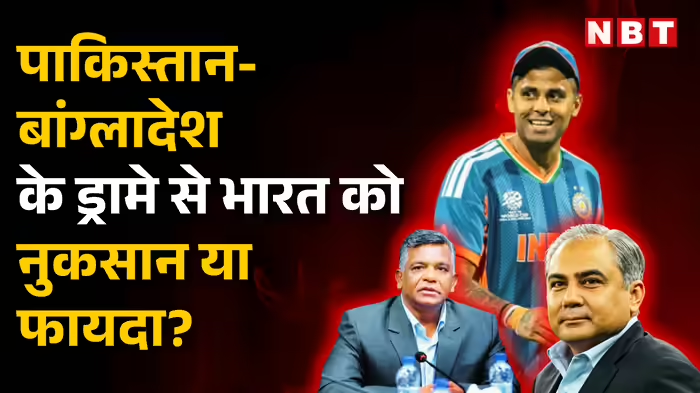
New Delhi: The ICC T20 World Cup 2026 witnessed a major controversy that shook the cricketing world, involving India, Pakistan, Bangladesh, and the ICC. The dispute went beyond the cricket field, touching on politics, diplomacy, and historical sensitivities. Here’s a detailed look at the situation and its impact on India.
How the Controversy Began and Its Outcome
The drama began when the Bangladesh Cricket Board (BCB) refused to play matches in India, citing security concerns. Shortly after, Pakistan aligned with Bangladesh and threatened not to play their match against India. After weeks of tension, a tripartite meeting in Lahore resolved the issue—but India and the BCCI bore the brunt, while the opposing boards benefited.
5 Reasons Why BCCI and ICC Faced a Setback
1. Bangladesh’s Political Card and Anti-India Agenda
The Bangladesh government used India as a political issue ahead of upcoming elections. By promoting anti-India sentiment among its public, Bangladesh turned the T20 World Cup boycott into a political statement. They succeeded in sending a message that they would not yield to India, even if it meant skipping a major international tournament.
2. Rebel Boards Remained ‘Safe’ Without Penalty
Typically, any board boycotting an ICC tournament faces heavy fines and sanctions. Surprisingly, after meetings between the ICC, PCB, and BCB, it was decided that Bangladesh would face no penalties. Despite causing broadcasters significant financial losses, the Bangladesh Cricket Board remained unscathed, raising questions about ICC’s credibility.
3. Rewarded with a Future ICC Tournament
In an unprecedented move, ICC promised Bangladesh the hosting rights for a major ICC tournament between 2028 and 2031. Instead of facing sanctions for skipping the World Cup, Bangladesh converted its short-term loss into a future advantage, leaving India and the ICC powerless.
4. Challenging BCCI’s Monopoly
By uniting, Pakistan and Bangladesh sent a strong message: the BCCI cannot dictate terms despite its financial dominance. The two boards proved that collective pressure can force the ICC to comply, even with seemingly unreasonable demands. Pakistan successfully challenged India’s influence on the international stage.
5. Bangladesh Aligns with Pakistan, Ignoring History
Perhaps the most concerning aspect for India is Bangladesh siding with Pakistan, forgetting the 1971 history when India helped Bangladesh gain independence from Pakistan. In the pursuit of sports and politics, Bangladesh aligned with Pakistan, creating a strategic worry for India.
This incident underscores how cricket, politics, and diplomacy are deeply intertwined, and how decisions off the field can have long-term implications for India’s standing in world cricket.
Discover more from SD NEWS agency
Subscribe to get the latest posts sent to your email.