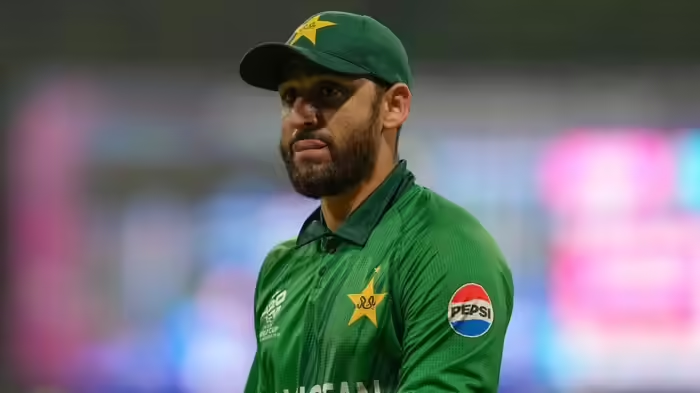
Pakistan initially refused to play against India in the T20 World Cup 2026, only to reverse its decision within nine days, now confirming that the much-anticipated clash will go ahead on 15 February.
The Plot to Politicize Cricket
According to sources in New Delhi, Pakistan attempted to leverage cricket for political gain, invoking regional solidarity with Bangladesh. Ironically, Bangladesh was born out of Pakistan’s 1971 oppression, aided by India. Yet, Pakistan staged a show of unity with Bangladesh, announcing that it would boycott the India match in the T20 World Cup.
The controversy began after Bangladeshi player Mustafizur Rahman left the IPL, with Pakistan reportedly trying to capitalize on the situation diplomatically and politically. The decision to boycott the India match was even announced in Pakistan’s Parliament, with Prime Minister Shehbaz Sharif calling it a “well-considered” move. However, the rationale unraveled within nine days.
Disguising Politics as Sportsmanship
Under the guise of “regional unity,” Pakistan attempted to corner India. Following political changes in Bangladesh under Sheikh Hasina, Pakistan saw an opportunity to assert influence. However, the ICC’s firm stance forced Pakistan onto the back foot. The cricketing board now claims the reversal was to “preserve the spirit of the game,” implicitly admitting the initial decision went against sportsmanship.
ICC Warning and Pressure
The ICC had made it clear that non-participation against India could lead to sanctions against the Pakistan Cricket Board (PCB). These included difficulties in obtaining NOCs for foreign players in the Pakistan Super League, compensating for tournament losses, and potential bans from ICC events.
The Financial and Strategic U-Turn
Despite Pakistan’s strong cricketing legacy, the PCB is under financial and political strain. Cricket experts note that an India-Pakistan match typically generates over $200 million in marketing value. A board earning $35–40 million could hardly afford to forgo such a lucrative fixture, particularly under threat of ICC action. Consequently, the reversal became inevitable.
Pressure from Other Boards
Alongside ICC warnings, Sri Lanka Cricket reminded Pakistan that their teams had played in Pakistan despite security concerns. The Bangladesh Cricket Board (BCB) and UAE Cricket Board also emphasized that boycotting the match would harm the cricket ecosystem and cause financial losses to ICC-affiliated countries.
ICC’s Role and Past Precedents
To maintain diplomacy, ICC showed some leniency, including assurances that punitive action would not be taken against Bangladesh and its revenue would remain secure. Reports suggest Pakistan’s demand to play a neutral-venue series against India may also be accommodated.
History shows cricket boycotts are not new. During the 1996 World Cup, Australia and West Indies refused to play in Sri Lanka due to local violence, giving Sri Lanka walkovers and ultimately helping them reach the final in Lahore. Similarly, in the 2003 World Cup, England and New Zealand skipped matches against Zimbabwe and Kenya over security concerns, benefiting other teams. Such events highlight how cricket diplomacy has long been a tool to balance international relations.
Pakistan’s nine-day U-turn in the T20 World Cup demonstrates that cricket and politics remain inseparable, yet sporting and financial realities often prevail over political maneuvers.
Discover more from SD NEWS agency
Subscribe to get the latest posts sent to your email.