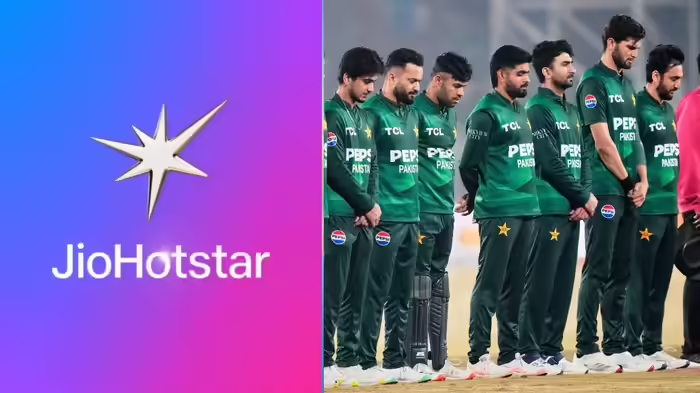
Pakistan’s decision to boycott the highly anticipated India-Pakistan clash on 15 February during the T20 World Cup 2026 could have severe financial and legal repercussions for the Pakistan Cricket Board (PCB). According to media reports on 5 February, the ICC has warned PCB that the move could trigger a major lawsuit from official broadcaster JioStar.
PM Shehbaz Sharif Stands Firm
Pakistan Prime Minister Shehbaz Sharif reiterated his government’s stance before the federal cabinet in Islamabad, stating, “We have taken a clear position that we will not play against India in the T20 World Cup.” While Sharif termed it a principled decision separating politics from sports, experts argue that the move is politically motivated, particularly in protest of Bangladesh’s exclusion from the tournament.
Legal Action by JioStar and Billion-Dollar Losses
India-Pakistan matches are major revenue generators for broadcasters. The four scheduled World Cup matches between the two teams were projected to generate around $1 billion (approximately ₹8,300 crore) in revenue for broadcasters. ICC’s broadcasting contracts were signed on the assumption that the two teams would play each other. If Pakistan withdraws, it could constitute a breach of contract, allowing JioStar to sue both PCB and ICC. The cancellation of just this one match is expected to result in losses of ₹200–250 crore for the broadcaster alone.
ICC May Take Strict Measures
To recover potential losses, the ICC could take stringent action. Sources indicate that the ICC may withhold Pakistan’s entire annual revenue share of about $35 million (around ₹290 crore) to compensate the broadcaster. This would be a major blow to PCB, as more than 50% of the board’s revenue comes from ICC funds.
PCB Considers Force Majeure Defense
Facing mounting pressure, PCB is reportedly exploring the force majeure clause, which applies under unavoidable circumstances that prevent fulfilling contractual obligations. However, experts believe this argument may not hold in the ICC’s Dispute Resolution Committee (DRC), as Pakistan has already agreed to play at neutral venues like Sri Lanka, and there is no legitimate security concern. Reports also suggest that PCB Chairman Mohsin Naqvi sought support from other member boards, but no country backed Pakistan. In contrast, BCCI has consistently agreed to neutral-venue matches with Pakistan, further strengthening India’s position before the ICC.
With billions at stake, Pakistan’s refusal to face India could trigger a legal and financial storm, placing the PCB in a precarious situation just days before the marquee clash.
Discover more from SD NEWS agency
Subscribe to get the latest posts sent to your email.