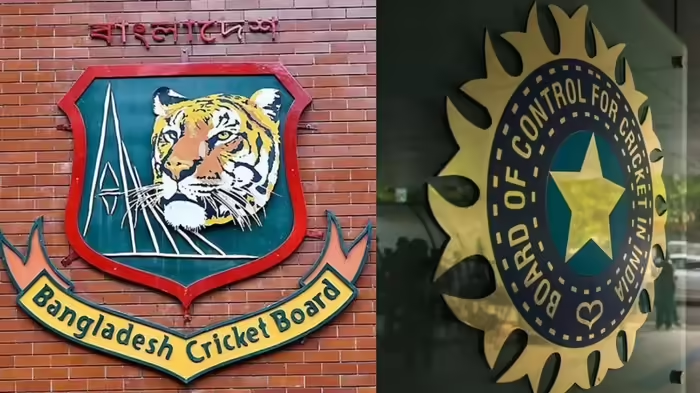
India vs Bangladesh: The Bangladesh Cricket Board (BCB) has once again expressed concerns over their players’ safety in India and has formally requested the International Cricket Council (ICC) to reschedule their matches to Sri Lanka. This dispute, triggered by the Mustafizur Rahman controversy, has raised questions about the authority of the Board of Control for Cricket in India (BCCI) and the possible involvement of the Indian government.
Here’s a breakdown of the situation in five key points:
1. ICC Yet to Make an Official Statement
Despite several days passing since the controversy erupted, the ICC has not issued any formal statement. Media reports suggest that ICC Chairman Jay Shah has initiated discussions to potentially reschedule the T20 World Cup matches for Bangladesh. However, no official clarification has been provided, leaving the actual stance of the ICC unclear. Reports indicate that ICC officials may hold meetings with both BCCI and BCB in the coming days to finalize the decision.
2. Does BCCI Have the Authority to Stop Bangladesh?
As the co-host of the ICC event, the BCCI has the authority to intervene in such matters. With only 30 days left before the start of the tournament, altering the schedule could create significant logistical challenges, not just for Bangladesh but for other teams as well. Since the BCCI is responsible for ground-level arrangements, any rescheduling would primarily affect its operations and revenue. The BCCI could legitimately raise objections to such changes, citing fan commitments, hotel bookings, and flight arrangements already made in anticipation of the original schedule.
3. Role of the Indian Government
The Indian government could play a crucial role, as the BCB’s actions have reportedly been guided by directives from Dhaka. Bangladesh has already imposed a broadcast ban on IPL 2026 within their country, reflecting the diplomatic dimensions of the dispute. Any rescheduling could impact India-Bangladesh relations, making it important for BCCI to seek guidance from the government. Recent engagements, such as Foreign Minister S. Jaishankar attending the funeral of former Bangladeshi PM Khaleda Zia, show that both sides are keen on maintaining positive signals, but the government’s final stance on this issue remains uncertain.
4. Could ICC Take Action Against Bangladesh?
Historically, teams refusing to play scheduled matches have faced sanctions. For instance, during the 1996 World Cup, Sri Lanka’s refusal to travel resulted in point deductions, while in 2016, Australia’s refusal to play in Bangladesh’s Under-19 World Cup led to replacement by Ireland. However, Bangladesh has cited the precedent of India rescheduling matches in the 2025 Champions Trophy when they refused to play in Pakistan. This makes it less straightforward for ICC to penalize Bangladesh.
5. Impact on Other Teams in Bangladesh’s Group
Bangladesh is scheduled to play three group-stage matches at Eden Gardens, Kolkata (7 Feb vs West Indies, 9 Feb vs Italy, 14 Feb vs England) and one at Wankhede Stadium, Mumbai (17 Feb vs Nepal). Any rescheduling could force other teams to undertake long journeys between India and Sri Lanka, creating logistical challenges amid the tightly packed T20 World Cup schedule. Other teams may also raise objections if their travel and preparation plans are disrupted.
With less than a month to go before the T20 World Cup 2026, the unfolding situation highlights the complex intersection of cricket administration, diplomacy, and player safety. Both BCCI and the Indian government will play key roles in resolving this high-stakes dispute.
Discover more from SD NEWS agency
Subscribe to get the latest posts sent to your email.