Patna:
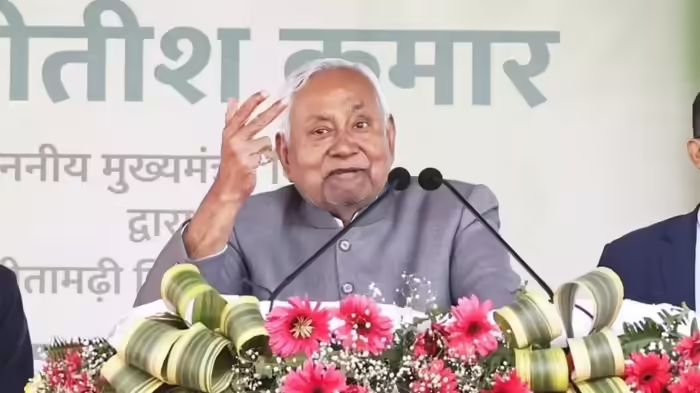
Bihar Chief Minister Nitish Kumar is currently touring the state under his much-publicised Samriddhi Yatra. Two phases of the journey have already been completed, with the second phase concluding in Samastipur on January 29. However, as the yatra progresses from one district to another, a striking pattern has emerged — the Chief Minister’s speeches increasingly resemble a “repeat telecast”.
If the dates and locations are changed, many of Nitish Kumar’s addresses sound almost identical. The words, expressions and even the sequence of events on stage appear familiar. With continuous travel and frequent public meetings, the speeches often revolve around the same set of phrases, repeated with minor variations.
Phrases such as “The earlier government did nothing,” “Everything was wrong before,” “Since we came to power, work is being done properly,” and “Raise your hand and tell me” have become recurring elements of his addresses. His body language, entry onto the stage, interaction with the crowd and even his exit follow a predictable pattern.
Yet, despite the repetition, one aspect remains unchanged — his remarkable enthusiasm.
A Glimpse from the Samastipur Rally
At the Samastipur public meeting, Nitish Kumar arrived on stage alongside senior leaders, waving to the crowd amid loud cheers. Visibly pleased by the turnout, he began his speech by thanking both party leaders and the public.
He soon returned to his familiar narrative.
“The earlier regime did some work, but much was left undone,” he said. “Now, every single task is being carried out properly. Bihar is developing, and your future will be better.”
As usual, he paused to engage the audience.
“Everything is fine, isn’t it?” he asked with a smile. “Tell me — raise your hands!”
The crowd responded enthusiastically. Encouraged, the Chief Minister switched to a Magahi-Bhojpuri blend, urging people again:
“Raise your hands and say it!”
When that wasn’t enough, he pushed further:
“Stand up and say it — is the work happening or not?”
The crowd erupted once more.
Crowd Interaction as Political Theatre
Pointing towards leaders seated on the dais, Nitish Kumar invited them forward and asked the public to signal whether development work had been done in their areas. Each response was met with applause, reinforcing the collective energy of the gathering.
“Stay strong,” he told the crowd, waving as he prepared to leave the stage.
Familiar Words, Lasting Connect
While critics may call the speeches repetitive, supporters argue that Nitish Kumar’s strength lies not in novelty, but in connect. His conversational tone, local dialect and constant interaction with the crowd continue to energise public meetings.
Even if the words sound familiar, the response from the masses suggests that the emotional impact remains intact — proving that in Bihar’s political landscape, delivery often matters more than dialogue.
Discover more from SD NEWS agency
Subscribe to get the latest posts sent to your email.