New Delhi/Godda:
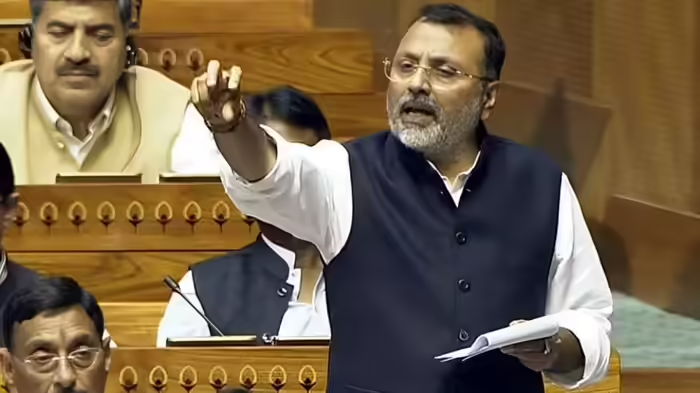
In a surprising remark during a Lok Sabha debate on electoral reforms, BJP MP Nishikant Dubey expressed happiness over his parents’ names being removed from the voter list. He used the moment to launch a sharp attack on the Congress over Electronic Voting Machines (EVMs) and the ongoing controversy around voter rolls.
My Parents Live in Delhi, They Shouldn’t Vote in Bihar
Dubey explained that under the SIR (Systematic Voter Education and Electoral Participation) process, his parents’ names were deleted from the Bihar voter list. He argued that this was both logical and justified, since they have been residing in Delhi and therefore hold no right to vote in Bihar.
He emphasised that when a voter migrates to another state, removing their names from the original constituency’s voter list is an essential and fair step in ensuring electoral integrity.
Dubey Hits Back at Congress on EVM Issue
Responding to repeated attacks by opposition parties on Electronic Voting Machines, the BJP MP reminded Parliament that EVMs were actually introduced by the Congress itself.
He stated:
- EVMs were first introduced as a pilot project by Rajiv Gandhi in 1987.
- In 1991, the Congress government under P.V. Narasimha Rao officially decided to adopt them.
Dubey said it was ironic that the same party which brought EVMs to India is now raising doubts over them.
SIR-Based Deletions Influenced Election Results: Dubey
Citing constituency-level data, Dubey argued that voter deletions under the SIR process significantly impacted several closely contested seats, many of which were won by Congress and RJD:
Valmiki Nagar: 2,311 votes removed; Congress won by 1,675 votes
Chanpatia: 1,033 votes removed; Congress won by 602 votes
Dhaka: 457 votes removed; RJD won by 178 votes
Forbesganj: 1,400 votes removed; Congress won by 221 votes
Ramgarh: 1,197 votes removed; BSP won by only 30 votes
Using these figures, Dubey claimed that while opposition parties accuse the BJP of manipulating voter lists, it was actually the SIR process that ended up benefiting them.
We Don’t Do Vote Politics, We Do Nation Politics
Concluding his remarks, Nishikant Dubey stressed that he does not engage in “vote-bank politics,” asserting that his commitment is to the nation’s politics, not electoral arithmetic.
Discover more from SD NEWS agency
Subscribe to get the latest posts sent to your email.