Lucknow:
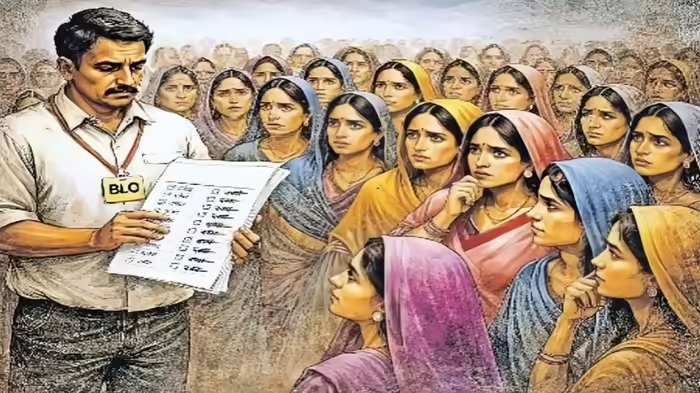
Women voters, who have emerged as decisive game changers in recent Uttar Pradesh elections, appear to be the biggest casualties of the Special Intensive Revision (SIR) of the electoral rolls. The draft voter list released after the SIR exercise indicates that significantly more women than men have been removed, triggering concerns over a widening gender gap and its potential impact on the state’s political landscape.
According to preliminary trends emerging from district-level data, women account for a disproportionately higher share of deletions from the voter list. In several districts, the gap between male and female voters has widened by 3 to 5 percentage points. Statewide estimates suggest that over 10 per cent more women voters than men have been excluded from the draft rolls.
The draft voter list was released on January 6 by Chief Electoral Officer Navdeep Rinwa, showing the deletion of 2.89 crore voters across Uttar Pradesh. When questioned about the gender ratio at the time of release, the CEO deferred the issue, stating that an assessment would be conducted later. Even three days after the publication of the draft list, the Election Commission has not officially clarified the gender-wise breakup, adding to political and administrative unease.
Rural Districts Most Affected
The impact appears particularly severe in rural and eastern Uttar Pradesh. In Kushinagar district, 2.20 lakh male voters and 2.82 lakh female voters were removed, with women facing higher deletions across all seven assembly constituencies. In Balrampur, 1.88 lakh men and 2.23 lakh women were struck off the rolls. As a result, women’s share in the district’s electorate has fallen from over 46 per cent to nearly 43 per cent.
Similarly, in Shahjahanpur district, where women voters were already fewer than men by 1.71 lakh before SIR, the gap has widened to 2.05 lakh in the draft list. Sources indicate that this trend is prevalent across most rural districts, particularly in Purvanchal.
Marriage-Related Migration a Key Factor
Political party functionaries closely monitoring the SIR process attribute the higher deletion of women voters to post-marriage migration. In rural areas, women often shift their residence to their in-laws’ homes after marriage, leading to address mismatches during verification.
Additionally, the SIR guidelines required linkage with the 2003 voter list, including parental details. Errors or missing information in this process reportedly resulted in large-scale deletions, disproportionately affecting women.
Political Implications
While the Election Commission and political parties claim that efforts are underway to re-enroll eligible voters through the claims and objections process, analysts warn that a sustained gender imbalance in the electorate could significantly alter electoral outcomes.
In a state where women voters have increasingly shaped mandates, any sharp change in gender ratios is likely to have far-reaching political consequences. As the final voter list approaches, pressure is mounting on election authorities to ensure transparency and corrective measures to prevent the unintended disenfranchisement of women voters.
Discover more from SD NEWS agency
Subscribe to get the latest posts sent to your email.