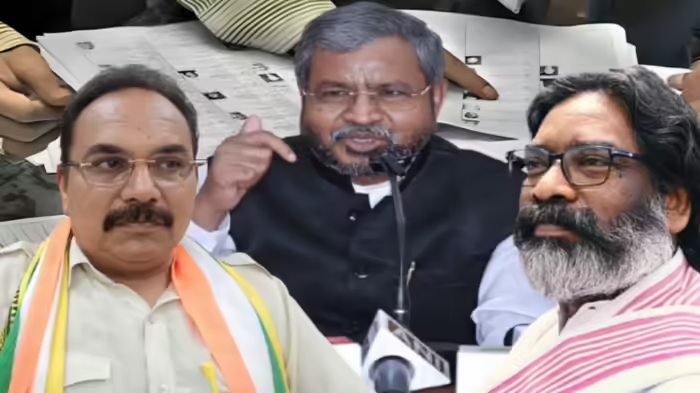
Ranchi: A political storm has erupted in Jharkhand over the Summary Revision of Electoral Rolls (SIR), ahead of the upcoming exercises in April. The process, aimed at updating voter lists, has become a point of contention between ruling and opposition parties.
BJP Calls It Electoral Roll Purification
According to Babulal Marandi, Leader of the Opposition in the Jharkhand Assembly, the SIR is a routine process carried out across India every ten years. It ensures that deceased voters, those who have moved out of the state, and ineligible voters are removed from the rolls. Addressing the concerns about illegal entries, Marandi stated that the process is strictly under the Election Commission’s authority, and the goal is to safeguard the voting rights of genuine Indian citizens.
Marandi also targeted the Congress, accusing the party of opposing SIR to protect illegal voters, particularly those who may have entered the state from Bangladesh. “Only Indian citizens have the right to vote. The government will be decided by the citizens of India, not by illegal entrants,” he said.
Opposition Raises Allegations of Bias
On the other hand, the opposition—comprising Congress and Jharkhand Mukti Morcha (JMM)—claims that the SIR exercise is being misused for political gains. Congress Legislature Party leader Pradeep Yadav said the party is not against voter revision but strongly opposes any abuse that could disenfranchise legitimate voters, calling it a threat to democracy.
JMM legislator Hemlal Murmu accused the BJP of using SIR as a backdoor method to target voters from tribal, minority, and Christian communities. He alleged that the process could be manipulated to remove anti-BJP voters from the rolls, thereby reducing their numbers in the electorate.
SIR Across 22 States and UTs
JDU legislator Saryu Rai defended SIR, stating that those questioning the process are disregarding Supreme Court directives. According to the Election Commission, SIR is currently underway or planned in 22 states and union territories, including Andhra Pradesh, Arunachal Pradesh, Chandigarh, Dadra & Nagar Haveli and Daman & Diu, Haryana, Himachal Pradesh, Jammu & Kashmir, Jharkhand, Karnataka, Ladakh, Maharashtra, Manipur, Meghalaya, Mizoram, Nagaland, NCT of Delhi, Odisha, Punjab, Sikkim, Tripura, Telangana, and Uttarakhand. Chief Electoral Officers of these states and UTs have been instructed to complete all preparatory work on time.
What Voters Need to Know
Residents are advised to check their names in the voter list and ensure details are accurate. The SIR process is crucial to maintain a fair and updated electoral roll, allowing eligible citizens to exercise their right to vote without hindrance.
Discover more from SD NEWS agency
Subscribe to get the latest posts sent to your email.