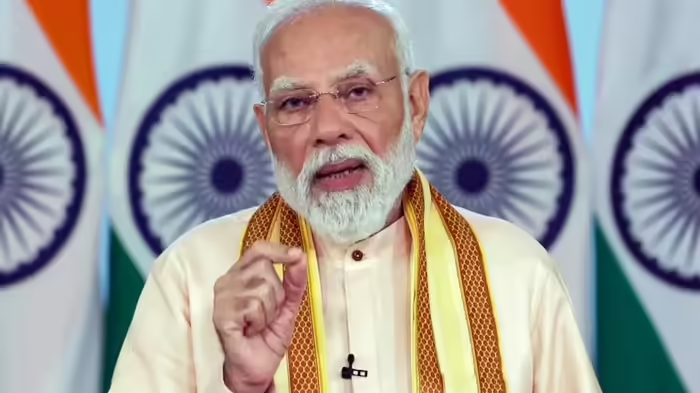
New Delhi: On Thursday, Prime Minister Narendra Modi hailed the passage of the SHANTI Bill by both houses of Parliament as a “historic and transformative step” for India’s technological landscape. He expressed gratitude to all Members of Parliament who voted in favor of the legislation, which allows private sector participation in the country’s nuclear energy sector. The Prime Minister shared his remarks on social media platform X following the bill’s approval.
PM Modi Highlights the Bill’s Impact
Prime Minister Modi stated that the new law will promote Artificial Intelligence (AI) safely, strengthen green manufacturing, and provide a significant push toward a clean energy-based future for India and the world. He added that the SHANTI Bill will open new avenues for private players and young entrepreneurs. Modi urged investors and innovators that now is the opportune time to invest, innovate, and manufacture in India.
Parliament Approves the Bill
The bill, officially titled “Sustainable Exploitation and Promotion of Nuclear Energy for India’s Transformation (SHANTI) Bill, 2025,” was passed in the Rajya Sabha through a voice vote after discussions and responses from Union Minister of State for Atomic Energy, Jitendra Singh. All amendments proposed by opposition members were rejected. The Lok Sabha had passed the bill a day earlier.
Opposition Raises Concerns
During discussions, ruling party members described the legislation as historic and crucial to achieving India’s vision of a developed nation by 2047. However, opposition members criticized the bill for not clearly defining supplier liabilities and expressed concerns that it could pave the way for private corporate groups to enter a sensitive sector.
Budget and Safety Provisions
Responding to questions, Minister Jitendra Singh stated that the bill contains some pre-existing provisions, which opposition members opposed despite being in place previously. He said the nuclear sector has a budget of over ₹37,000 crore and plays a key role in India achieving its target of 100 GW of clean energy by 2047. Singh emphasized that private participation will be allowed, but all safety measures remain in place, continuing the legacy of policies initiated by India’s first Prime Minister, Jawaharlal Nehru.
The minister further assured that operators will be liable in case of losses, and a Nuclear Liability Fund will be maintained. Singh stated, “India no longer follows; the world follows India,” acknowledging Nehru’s contributions to the development of the country’s nuclear energy sector.
Discover more from SD NEWS agency
Subscribe to get the latest posts sent to your email.