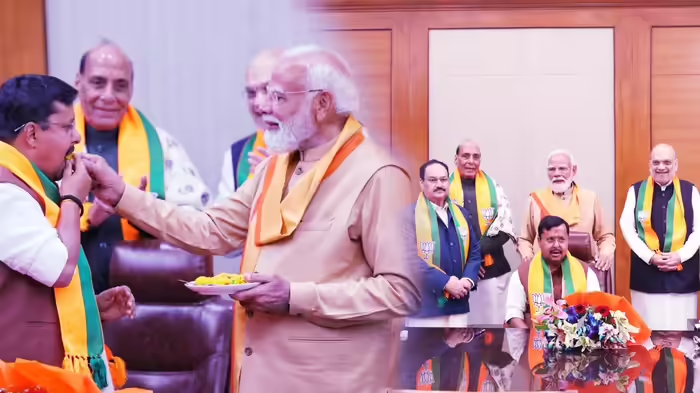
Patna: A strategic and generational shift is clearly underway within the Bharatiya Janata Party (BJP), as Prime Minister Narendra Modi guides the transition from the old guard to a younger, energetic leadership. The appointment of 45-year-old Nitin Nabin as the party’s national president exemplifies this change, signaling BJP’s growing emphasis on leaders under 55 years of age. Nabin, a five-time legislator and former Bihar minister, is arguably the youngest president in BJP’s history, underscoring the party’s readiness to bet on youth.
A Calculated Transition
This generational shift is not sudden but part of a decade-long process. An analysis of BJP-ruled states shows that age has increasingly influenced the selection of chief ministers. Currently, nine out of 14 BJP chief ministers were under 55 when sworn in, including Uttar Pradesh’s Yogi Adityanath (49), Uttarakhand’s Pushkar Singh Dhami (46), and Arunachal Pradesh’s Pema Khandu (44). Recent promotions of leaders like Bhajan Lal Sharma in Rajasthan and Mohan Yadav in Madhya Pradesh also reflect this deliberate strategy of elevating younger leadership from grassroots levels.
Youth Meets Experience
The rationale for this shift is practical: PM Modi expects high levels of energy, commitment, and active engagement from his team, qualities more commonly found in younger leaders. However, experienced leaders are not being sidelined. The BJP has carefully calibrated its leadership balance, pairing youthful chief ministers with seasoned state presidents (average age 58) and deputy ministers (average age 57). For example, in Uttar Pradesh, while CM Yogi Adityanath is young, the newly appointed state president Pankaj Chaudhary is 61, ensuring stability alongside vitality.
Political Age Balance as a Strategy
This balance guarantees that while governments benefit from youthful dynamism, the party retains mature organizational experience. Nitin Nabin’s appointment also reinforces centralization of decision-making; sources indicate his selection was a direct choice of PM Modi, independent of factional lobbying or traditional RSS consultation mechanisms. It sends a clear signal to party members that grassroots utility and loyalty matter more than media popularity for advancement.
Experimentation Within the Party
Excluding established faces like Yogi Adityanath, Himanta Biswa Sarma, and Devendra Fadnavis, many of the new chief ministers are still politically dependent on Modi’s leadership to win elections. This experimentation prevents stagnation, continuously refreshing leadership to counter anti-incumbency waves and inject new energy into governance. Nitin Nabin now faces the challenge of bridging this energetic, youthful team with seasoned leaders, asserting himself not merely as a “shadow president,” but as a credible and influential leader in his own right.
Discover more from SD NEWS agency
Subscribe to get the latest posts sent to your email.