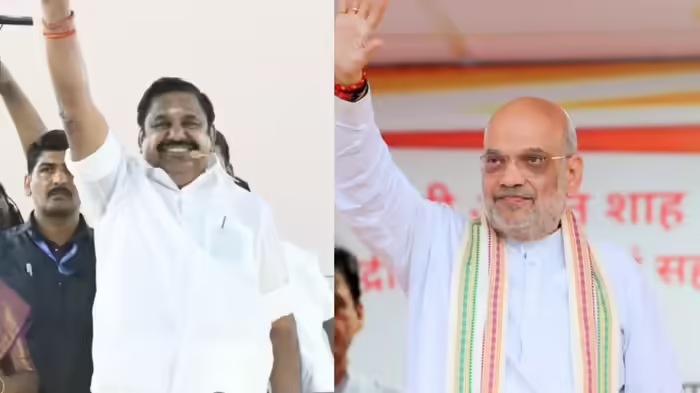
New Delhi / Chennai: Ahead of the upcoming Tamil Nadu Assembly elections, the Bharatiya Janata Party (BJP) and AIADMK are reportedly close to finalizing an agreement on power sharing along with seat-sharing arrangements. BJP sources indicate that AIADMK has nearly agreed to announce a pre-poll power-sharing plan, signaling that if the NDA wins, the government will represent the entire alliance rather than solely AIADMK.
NDA Alliance in Tamil Nadu
The BJP-AIADMK alliance for the state elections follows AIADMK’s return to the NDA last year. In April 2025, when BJP leader Amit Shah visited Tamil Nadu, AIADMK officially rejoined the NDA. Shah had announced that the Assembly elections would be contested under AIADMK leader and former Chief Minister Edappadi K. Palaniswami (EPS), and that the government formed post-election would belong to the NDA.
However, soon after this announcement, AIADMK leaders suggested that even if the NDA wins, AIADMK would form the government independently. EPS himself had publicly stated on several occasions that if his party won the elections, AIADMK would form a single-party government in Tamil Nadu, while acknowledging that the alliance would contribute to the victory. This position had created ambiguity around the power-sharing arrangement.
Consensus Reached
According to sources, the issue has now been resolved. During a meeting last week between Amit Shah and AIADMK leaders, the BJP clearly stated that any government formed would be NDA-led, meaning the BJP would also share power. AIADMK leaders may publicly announce this pre-poll agreement before the elections.
Historical Context: Power Sharing in Tamil Nadu
Traditionally, national parties in Tamil Nadu have been reluctant to share power with local allies. DMK and AIADMK, despite contesting elections in alliances, have rarely included allies in state cabinets. Since 1967, pre-election alliances have been common in the state. From 1979 onward, either DMK or AIADMK has been part of central coalition governments, with AIADMK joining the Charan Singh government in 1979 and DMK ministers entering VP Singh’s cabinet a decade later. Between 1996 and 1999, the coalition era solidified, with DMK leaders holding central cabinet positions across NDA and UPA governments.
Yet, in Tamil Nadu, state-level alliances rarely translate into power-sharing, as both DMK and AIADMK prefer to retain single-party control when forming state governments. The BJP-AIADMK agreement marks a significant departure, signaling a cooperative approach for governance if the NDA wins the upcoming Assembly elections.
Discover more from SD NEWS agency
Subscribe to get the latest posts sent to your email.