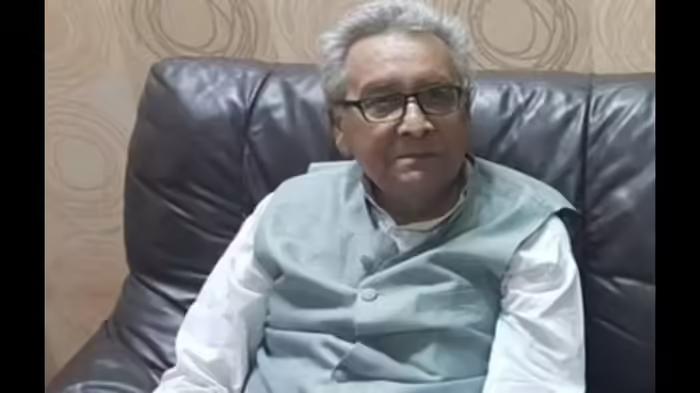
Patna, Bihar: January 28, 1968, marked a historic day in Bihar’s political history. On this day, Satish Prasad Singh became the first Chief Minister from the Other Backward Classes (OBC). His appointment was the result of a strategic political arrangement by the Congress, but his tenure lasted only a few days before he voluntarily resigned.
A Journey from Humble Beginnings to Power
Satish Prasad Singh hailed from a landed family in Kurchakka village, Munger district. His interest in politics developed during his academic years. Singh’s electoral journey was fraught with setbacks. In 1962, contesting on an Independent ticket, he lost the election—and even had to sell land to fund his campaign. In 1964, he contested a by-election but luck eluded him again, requiring him to part with property once more.
However, Singh’s persistence and unyielding spirit paid off in 1967. Contesting from the Prakat Vidhansabha constituency on a United Socialist Party ticket, he won and entered the Bihar Assembly as a first-time legislator, determined to make his mark on the state’s political landscape.
The Political Turmoil of 1967
The year 1967 was pivotal in Bihar politics, as Congress faced rising socialist influence. The first non-Congress government under Mahamaya Prasad Sinha did not last long, and internal unrest within Congress created openings for new power equations. During this period, Satish Prasad Singh joined hands with leaders like B.P. Mandal and Bhola Prasad Singh to form the Shoshit Dal, a faction representing marginalized groups.
Congress capitalized on this opportunity to reassert itself, devising a rotation formula for OBC leadership in Bihar. According to the plan, three leaders—Satish Prasad Singh (Kushwaha), B.P. Mandal (Yadav), and Bhola Prasad Singh (Kurmi)—would take turns as Chief Minister.
28 January: A Historic Appointment
On 28 January 1968, Satish Prasad Singh was sworn in as Bihar’s first OBC Chief Minister, representing the Kushwaha community. However, the political equation within Congress shifted quickly. After only five days in office, Singh voluntarily resigned on 1 February 1968, ending his short but symbolically significant tenure. Plans to rotate the CM post to B.P. Mandal or Bhola Prasad Singh were put on hold.
A Brief but Impactful Tenure
During his five-day tenure, Singh’s cabinet consisted of only two ministers—Shatrumardan Shahi and N.E. Horo. His first significant decision was to recommend B.P. Mandal’s nomination to the Legislative Council, setting the stage for future OBC political leadership in Bihar.
Satish Prasad Singh’s journey from electoral defeats, personal sacrifices, and unshakable patience to becoming Bihar’s first OBC Chief Minister remains a landmark moment in the state’s political history.
Discover more from SD NEWS agency
Subscribe to get the latest posts sent to your email.