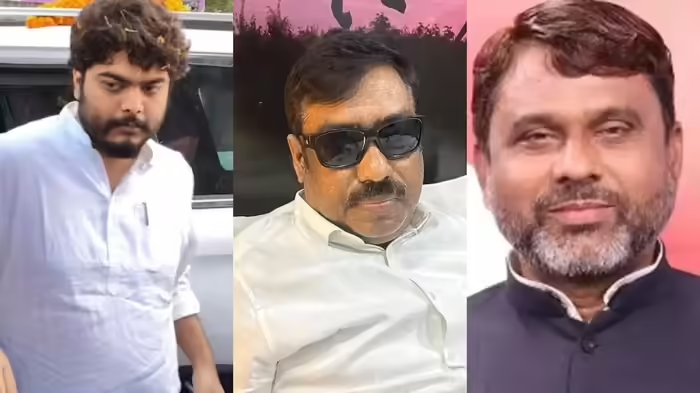
Patna: The 2025 Bihar Assembly elections have highlighted a stark underrepresentation of the Muslim community. While Muslims constitute 17.6% of the state’s population, their presence in the Bihar Legislative Assembly has been reduced to just 11 legislators, accounting for only 4.52% of total seats. This reflects the persistent social, economic, and educational marginalization of the community.
Given that religion-based reservation is not feasible under India’s democratic framework, questions have arisen regarding how the democratic system can adequately reflect the rights and aspirations of the Muslim population. Experts emphasize that Muslims must focus on strategic alignment on development issues rather than separatist approaches.
What Experts Say
Analysts argue that a separatist or isolated approach will not yield political empowerment. The example of caste-based political consolidation among Hindus demonstrates that collective action on development issues can lead to meaningful representation in governance. Even in Bihar, Chief Minister Nitish Kumar has attempted to integrate Muslim interests to some extent, emphasizing education, governance, and development, which has garnered partial support from the community.
Election Highlights: RJD, AIMIM, Congress, and JDU Performance
The Rashtriya Janata Dal (RJD) fielded 17 Muslim candidates, of whom only three secured victories: Faisal Rahman (Dhaka), Asif Ahmad (Bisfi), and Osama Shahab (Raghunathpur).
The All India Majlis-e-Ittehadul Muslimeen (AIMIM) secured five seats: Tausif Alam (Bahadurganj), Murshid Alam (Jokihat), Sarwar Alam (Kochadhaman), Gulam Sarwar (Baisi), and Akhtarul Islam (Amaur).
The Indian National Congress fielded 10 candidates, but only two won: Kamrul Hoda (Kishanganj) and Abidur Rehman (Araria). The Janata Dal (United) nominated four candidates, with only Jama Khan emerging victorious from Chainpur.
The 2025 elections underscore the continuing challenges faced by Muslims in Bihar—a significant population segment yet largely underrepresented in the legislature. Political analysts suggest that strategic coalition-building, focus on developmental issues, and enhanced educational empowerment are critical for improving representation in the state’s political landscape.
Discover more from SD NEWS agency
Subscribe to get the latest posts sent to your email.