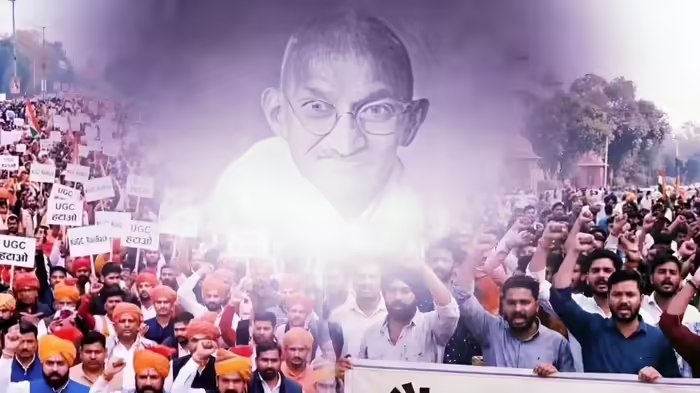
On the 78th death anniversary of Mahatma Gandhi, India is once again confronted with a stark reminder that social divisions along caste lines remain deeply entrenched. Recent Supreme Court remarks have highlighted that even decades after independence, Indian society has not freed itself from caste-based distinctions—raising urgent questions about the path ahead.
A Nation Struggling with Caste
The Supreme Court, in its review of new UGC regulations, warned that decisions ignoring social dynamics risk deepening divisions in society. The court’s observation underscores that India continues to grapple with caste-based fault lines, decades after the nation gained independence.
Gandhi, the father of the nation, would be deeply disheartened to see the political and social landscape today, where caste continues to shape debates—from caste-based census demands by opposition parties to the contentious UGC bill.
Gandhi’s Lifelong Struggle for Unity
Mahatma Gandhi dedicated his life to uniting all castes, particularly by inspiring upper-caste Hindus to support the upliftment of marginalized communities, including Dalits. His ability to mobilize society stemmed from moral authority and personal example; people would follow his guidance without hesitation because of his unwavering commitment to justice and equality.
Through the Harijan Movement, Gandhi actively encouraged temple entry, access to wells, ponds, and education for Dalits, appealing to upper-caste Hindus to change their mindset and treat Dalits as equals. His efforts sought to foster social harmony and dignity for historically oppressed communities.
Political and Social Silence
Today, however, political parties have largely remained silent, prioritizing caste-based vote banks over initiatives to bridge social divides. During debates over the UGC regulations, both upper-caste and SC/ST/OBC communities clashed on social media, while political leaders failed to intervene and unify society. Had the Supreme Court not stepped in, the situation could have escalated further.
This highlights a stark reality: political expediency often outweighs social conscience, leaving caste-based divisions unaddressed. Seventy-eight years after independence, India still risks being fragmented along these lines—a development Gandhi would have viewed with profound sorrow.
The Role of Leaders in Gandhi’s Time
Gandhi was not alone in his efforts. Prominent leaders such as Dr. Rajendra Prasad, Madan Mohan Malaviya, Jamnalal Bajaj, and Ghanshyam Das Birla actively supported the Harijan movement. They worked to open temples, promote education, and encourage economic contributions to uplift Dalit communities. Their leadership exemplified how social reform requires collective action, guided by moral responsibility.
Why Gandhi’s Vision Matters Today
Gandhi’s core belief was that eradicating untouchability was a moral duty of the upper castes, and that true social harmony depended on changing hearts, not just laws. As India navigates debates on caste-based policies and social equality, his philosophy remains as relevant today as it was during his lifetime.
The nation must pause on this anniversary of Gandhi’s passing to reflect: 78 years after independence, can India rise above caste divisions and honor Gandhi’s dream of an inclusive, united society?
Discover more from SD NEWS agency
Subscribe to get the latest posts sent to your email.