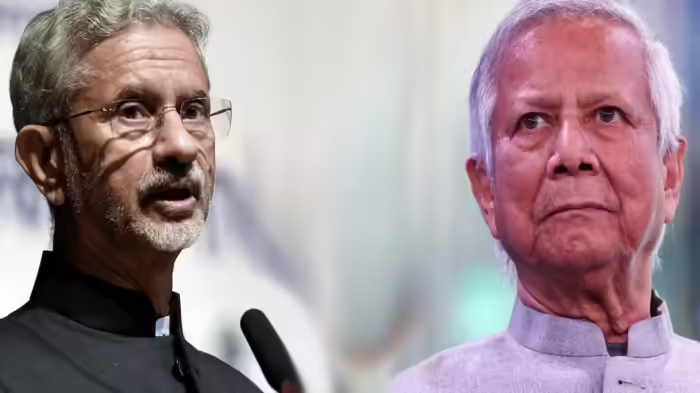
New Delhi: India’s External Affairs Minister S. Jaishankar visited Dhaka on Wednesday to attend the funeral of former Bangladeshi Prime Minister Khaleda Zia. While representing the Government of India and the Indian people, Jaishankar’s visit was marked by key diplomatic engagements, though notably, he did not meet Mohammad Yunus, the Chief Adviser of Bangladesh’s interim government.
At the airport, Jaishankar was welcomed by India’s High Commissioner to Bangladesh, Pranay Verma. During the funeral proceedings, he met with Tarique Rahman, leader of the Bangladesh Nationalist Party (BNP) and son of the late Prime Minister Khaleda Zia. However, there was no interaction with Mohammad Yunus, sparking widespread speculation about the reasons behind the absence of a meeting.
Speculations Around the Missed Meeting
Observers and analysts are debating why Jaishankar did not meet Yunus despite being in Dhaka. Was this a calculated diplomatic decision by India? If so, what message was India sending? Social media and political commentators have actively discussed the implications.
Foreign policy experts suggest that the decision reflects India’s measured approach. Yunus, who is known for his Islamist-leaning advisory role, has struggled to ensure justice for minority communities affected by violence in Bangladesh. By meeting BNP leaders instead, India has indirectly signaled its stance while maintaining diplomatic balance.
India’s Steady and Cautious Approach
Analysts note that India’s stance in Dhaka demonstrates a cautious policy during a period of political uncertainty. Supporting Bangladesh’s democratic roadmap while safeguarding strategic and security interests in the neighborhood remains a top priority. India’s measured engagement underscores its emphasis on policy continuity over political alignment, awaiting a clearer situation before engaging in top-level dialogue.
BNP’s Emerging Significance
Tarique Rahman and the BNP have recently distanced themselves from extremist allies like Jamaat-e-Islami, adopting a “Bangladesh First” approach. India appears to be observing whether the BNP could provide a more stable and less India-oppositional partnership compared to the current interim setup.
Ultimately, Jaishankar fulfilled the primary purpose of his visit by paying respects to the late Khaleda Zia and meeting her family. The absence of a meeting with Yunus reflects India’s strategic discretion and careful diplomacy in a sensitive regional environment.
Discover more from SD NEWS agency
Subscribe to get the latest posts sent to your email.