
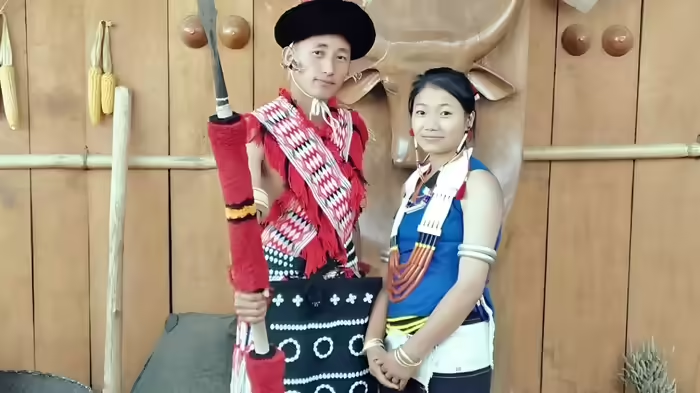
In one of the most striking examples of India’s diverse tribal heritage, a now-defunct tradition from Nagaland’s Longwa village reveals how acts of warfare, honour, and family pride were once deeply intertwined. According to this age-old custom, if a man beheaded an enemy, his wife would commemorate the act by getting a tattoo on her body—one tattoo for each head taken.
Located on the India–Myanmar border, Longwa village is unique not only for its geography—half of the village lies in India and the other half in Myanmar—but also for its centuries-old warrior culture. Among the local tribes, beheading an enemy was historically regarded as a symbol of bravery, prestige, and social status.
A Symbol of Valour and Celebration
As per tribal belief, severing an enemy’s head was not merely an act of violence but a heroic achievement. The wife’s tattoo served as a public symbol of her husband’s courage and the family’s elevated status within the community. The greater the number of tattoos, the higher the recognition accorded to the household.
Historical accounts note that warriors often preserved enemy skulls, displaying them publicly as trophies. Animal heads—such as those of mithun, buffalo, pigs, and deer—can still be seen adorning the walls of traditional homes, reflecting the village’s warrior past.
Life on a Border Without Borders
BBC reports describe Longwa as a place where borders arrived much later than its people. Signboards in both Hindi and Myanmar’s language coexist, and local lore famously says that the village chief dines in India but sleeps in Myanmar. Food such as meat, corn, and vegetables is traditionally stored in bamboo containers suspended above the central hearth.
The tribes of Longwa predate the political boundary between India and Myanmar, maintaining cultural continuity despite modern borders.
End of the Practice
Official records show that headhunting was banned in Nagaland in 1940, with the last known incident reported in 1969. Following the ban, all displayed skulls were removed and reportedly buried underground, marking the formal end of the practice.
The region has since undergone significant transformation. With the arrival of Christian missionaries in the early 19th century, Nagaland gradually shifted from nature worship to Christianity. Today, nearly 90 percent of the state’s population is Christian, and even the smallest villages typically have at least one church.
A Window into the Past
While the tradition may appear shocking through a modern lens, anthropologists view it as part of a broader warrior culture that once defined survival, identity, and honour. Today, it stands as a powerful reminder of how customs evolve—and how history, however uncomfortable, remains essential to understanding a people’s journey.
Discover more from SD NEWS agency
Subscribe to get the latest posts sent to your email.