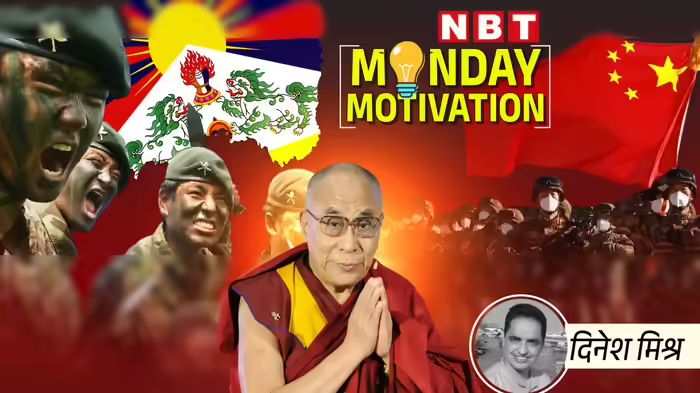
New Delhi: After fleeing Tibet in 1959 following China’s crackdown in Lhasa, the 14th Dalai Lama found refuge in India. In the wake of the 1962 India-China war, the Indian government covertly established a specialized force of Tibetan volunteers known as the “Tutu Army” or Establishment 22, officially called the Special Frontier Force (SFF). Its operations and methods remain highly classified. The CIA of the United States also assisted in setting up this secretive force.
Origins and Structure
The SFF was created under Prime Minister Jawaharlal Nehru’s government and was composed exclusively of Tibetan recruits. Its headquarters is located in Chakrata, Uttarakhand. Though not formally part of the Indian Army, senior army officers serve as its Inspector General. The force was initially commanded by Major General Ubban Singh, and former Indian Army Chief Dalbir Singh Suhag has also led the SFF.
Tibetan Monks and Guerrilla Warfare
In its early years, the Tutu Army included members of the Chushi Gangdruk fighters, Tibetan monks, students, and traders. They employed guerrilla tactics, a method that frustrated Chinese forces during border conflicts. Reports indicate that around 300 Buddhist monks served in the force at different times, returning to their monasteries after retirement. Recruits were trained in parachute jumps and high-altitude warfare, with support from Indian and U.S. intelligence agencies.
Historical Engagements
The Tutu Army played a significant role during the 1971 Bangladesh Liberation War, where its operatives successfully engaged Pakistani troops, and 46 guerrilla fighters lost their lives during Operation Eagle. The force also contributed during the 1999 Kargil War.
Dalai Lama Connection
The Dalai Lama’s younger brother, Tenzin Chogyal (Nagari Rinpoche), was among the officers of the 22 Army. At one time, most Tibetan refugee families had at least one member serving in the Tutu Army. While the Dalai Lama has remained a proponent of nonviolence, China has long viewed his leadership and the Tibetan monastic community with suspicion, fearing potential uprisings.
Geopolitical Context
China maintains that Tibet has always been part of its territory and that the Dalai Lama’s succession should be under Beijing’s approval—a claim strongly rejected by Tibetans. According to Tibetan tradition, the next Dalai Lama will be chosen through the practice of reincarnation, independent of Chinese influence.
Discover more from SD NEWS agency
Subscribe to get the latest posts sent to your email.