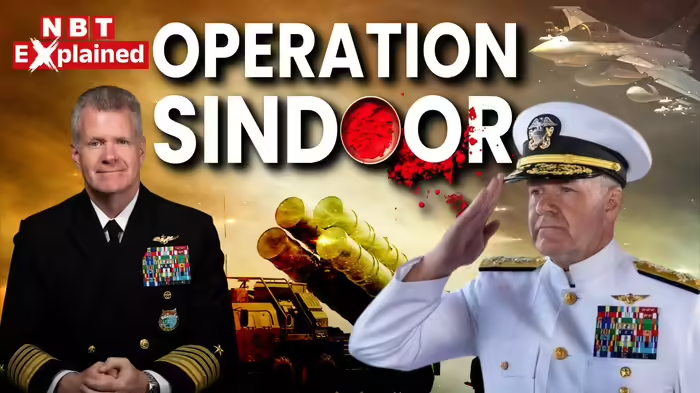
New Delhi, February 16, 2026: Admiral Samuel J. Paparo, Commander of the US Indo-Pacific Command, praised the Indian Army for its decisive action during Operation Sindoor against Pakistan and highlighted the growing need for closer US-India defense cooperation amid rising Chinese influence in the Indo-Pacific region.
Operation Sindoor: Lessons and Tactical Excellence
During his visit to India on Sunday, Admiral Paparo expressed deep empathy for the tragic events preceding the operation and lauded the Indian Army’s tactical response. “India’s commitment to learning from past conflicts is evident in the way it executed Operation Sindoor,” he said.
When asked about Pakistan’s use of Chinese-made weapons, Admiral Paparo noted that such long-range, complex systems include advanced sensors, communications, propulsion, and warheads. “These capabilities make geography less relevant in the 21st century. During Operation Sindoor, Chinese defense systems in Pakistan failed, and the Indian Army successfully neutralized them,” he added.
Addressing Rising Chinese Assertiveness
Admiral Paparo voiced concern over China’s growing military footprint in the Indo-Pacific, calling prevention the “highest duty” of both nations. He emphasized the region’s strategic importance, home to over 60% of the global population, 60% of global GDP, and seven of the world’s largest armies.
“The challenges we face are best addressed through strengthened partnerships,” he said, underscoring the shared values and mutual respect between the world’s oldest and largest democracies. Both nations remain committed to sovereignty, freedom of navigation, and maritime security. Admiral Paparo praised India’s critical role in safeguarding the Indo-Pacific region.
Strengthening US-India Defense Ties
Looking ahead to upcoming joint exercises, Admiral Paparo welcomed the recent defense agreement signed in Kuala Lumpur between US Secretary of Defense Pete Hegseth and Indian Defense Minister Rajnath Singh, describing it as a significant step in deepening bilateral military collaboration. He highlighted joint exercises including Alaska-based war drills, Milan, Malabar, COPE India, and public engagement initiatives as reinforcing the strategic partnership.
On modern warfare, Admiral Paparo noted that dominance in the information environment—space, counter-space, electronic warfare, and low-visibility technologies—will define 21st-century conflict.
Discover more from SD NEWS agency
Subscribe to get the latest posts sent to your email.