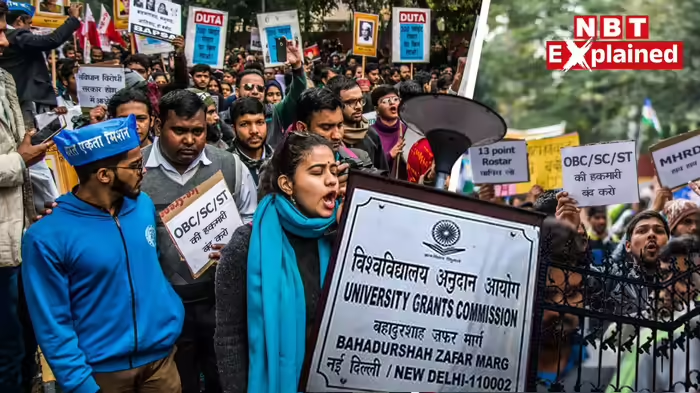
New Delhi, January 26, 2026: The University Grants Commission’s (UGC) new regulations, aimed at promoting equality in higher education, are sparking heated debate across social media. Critics from upper-caste communities claim the rules are biased against them and warn that they could create a hostile environment on college and university campuses. Meanwhile, backward class groups have welcomed the regulations as a step toward greater inclusion.
What the New UGC Regulations Say
Following directives from the Supreme Court, the UGC issued the “Regulations for Promoting Equality in Higher Educational Institutions, 2026.” These rules establish a structured framework to address complaints and provide assistance to students and staff from marginalized groups. The regulations were prompted by petitions filed by the mothers of Rohit Vemula and Payal Tadvi.
Under the new rules, every higher educational institution must set up an Equal Opportunity Cell (EOC), which will coordinate with civil society groups, district administration, faculty, staff, local media, and law enforcement. The EOC will also liaise with district and state legal service authorities to provide legal support. Scheduled Castes (SC), Scheduled Tribes (ST), and Other Backward Classes (OBCs) are now explicitly included in the definition of caste-based discrimination—a provision that has drawn sharp criticism from upper-caste communities while being welcomed by backward-class groups.
Structure and Role of the Equal Opportunity Cell
The EOC, to be headed by the institution’s leadership, will include representatives from OBCs, SCs, STs, persons with disabilities (PWDs), and women. Its responsibilities include implementing equality-related policies and programs, offering academic and financial guidance to marginalized groups, and coordinating with authorities and civil society. Students, faculty, and staff from backward classes can now file complaints regarding discrimination or harassment with the EOC.
Social Media Uproar and Criticism
The inclusion of caste-based discrimination provisions has ignited debates online. Critics argue that the regulations unfairly target students from non-reserved, upper-caste families. One social media user commented, “UGC’s new ‘equality’ rules shamelessly hold general-category students responsible for violence on campuses simply because they were born in non-reserved families! Equality committees are biased against us, leaving campuses like battlefields of caste conflict.” The hashtag #ShameonUGC is currently trending on X.
Rising Complaints of Caste-Based Discrimination
Data submitted by the UGC to parliamentary committees and the Supreme Court indicates that complaints of caste-based discrimination in higher education have surged 118.4% over the past five years. In 2019–20, 173 complaints were recorded; by 2023–24, this number had risen to 378. Between these years, a total of 1,160 complaints were received from 704 universities and 1,553 colleges.
Although reservations have been in place for OBCs in university admissions since 1990 and in faculty recruitment since 2010, participation from marginalized groups has remained below 15%. Even 36 years after the SC-ST (Prevention of Atrocities) Act of 1989, incidents of discrimination and harassment continue to rise. The new UGC regulations are intended to provide institutional mechanisms to address these ongoing inequities and ensure that marginalized communities receive both protection and support.
Discover more from SD NEWS agency
Subscribe to get the latest posts sent to your email.